Thursday, February 16, 2017

Pearls, Lace, & Purple Silk: A Magnificent c1770 Dress

Thursday, February 16, 2017
Susan reporting,

Some surviving 18thc dresses have become internet celebrities (I'm thinking of all the beautifully photographed dresses from the websites of the Metropolitan Museum of Art, the Kyoto Costume Institute, and the Los Angeles County Museum.) Thanks to social media and blogs like this one, these dresses are instantly recognizable - old friends of silk damask and lace - by costume historians, re-enactors, historical seamstresses, and anyone who just likes a beautiful, beautifully made garment from the past.

This dress, upper left, deserves to be as well known as her more publicized sisters. I've heard about this dress in costume circles for years ("The PEARLS", whispered in hushed awe), and I finally had the opportunity to see it in person at Winterthur Museum this past fall, thanks to Linda Eaton, John & Marjorie P. McGraw Director of Collections and Senior Curator of Textiles.  As always, click on the images to enlarge.

The rumors were right. It's stunning. The dress is a saque, or sack gown, made between 1765-1775, most likely in France. There are so many layers of texture and embellishment in this single dress. To begin with, the fabric (see detail, right) is a purple plain weave silk with a brocaded lace and flora design in white, yellow, orange, green, red, and pink textured yarn.  It almost appears to be elaborate embroidery, but all those flowers are in fact woven into the fabric.

The dress has several different kinds of trims. Around the neckline and edging the skirt is gathered lace, and loops of green silk cording. There's a different kind of gauze-like lace gathered into poufs on the skirts, (see detail, left) and the poufs are in turn decorated with silk tape or ribbon that has been hand-painted with red and purple c-scrolls, vines, and medallions. The tape is exquisite, the work of a highly skilled specialist, and I can't imagine how long it must have taken to paint such delicate detail.

If that isn't enough, there are strands of pearl-like glass beads threaded through the other trimmings. There was some question whether the pearls were a 19thc addition, when the dress could have been used as a fancy-dress or theatrical costume, but it was finally determined from the stitching and the beads themselves that they are in fact an 18thc embellishment, though likely added about ten years after the dress was originally made. Strands of faux pearls on dresses are shown in many 18thc portraits, but I'd never seen a dress with any still in place. When the next generation plundered an older dress, I'm sure glass pearls were among the first things cut off for reuse.

I also liked how the sleeve flounces were lined with a contrasting plain-weave blue silk. The flounces had an extra little secret, too, bottom right. Sewn inside each flounce was a flat, oval-shaped, lead weight, covered in fabric, that made the flounce hang correctly from the wearer's arms. Like all the most sumptuous 18thc clothing, it's the little luxurious details - everything stitched or otherwise created by hand - that are so special.

I saw the dress in a storage box, not on a mannequin; the photo, upper left, is by Winterthur, and the detail pictures are mine.

Saque dress, c1765-75, Winterthur Museum.

Tuesday, February 14, 2017

Be My Valentine

Tuesday, February 14, 2017

Loretta reports:

Many centuries ago, when I was in elementary school, we exchanged Valentine’s Day cards in the classroom. We made them, too, but most of the exchanges involved cards that came in  packages of 25 or 100. We traded candy hearts, too.

The sending of cards, notes, and other tokens of friendship or affection goes back centuries. For today, I offer a few historical links.

The New and Complete Valentine Writer for the Year 1805 provides a variety of Valentine’s poetry, rather different sentiments from what we exchanged in school. (The image above left is typical of ours.)

And here and here you’ll find some history about commercial Valentine’s Day cards, much more elegant than those we traded. You can see larger samples of the Whitney cards here.

Images: To My Valentine, 1890, courtesy Library of Congress Prints and Photographs Division Washington, D.C. 20540 

Clicking on the image will enlarge it.  Clicking on the caption will take you to the source, where you can learn more and enlarge images as needed.

Sunday, February 12, 2017

We're Back - and New Books Are Coming

Sunday, February 12, 2017
Susan reporting,

Finally, Loretta and I are back! After furious writing, holidays, groundhogs, and a couple of snowstorms, we can now report there WILL be new books from both of us this fall (as well as new blog posts in the meantime.)

First off: I've returned to writing historical fiction. I've also returned to being Susan Holloway Scott, while Isabella Bradford, my historical romance name, has gone on hiatus; it's all part of having multiple pseudonyms, and being a Gemini, too.

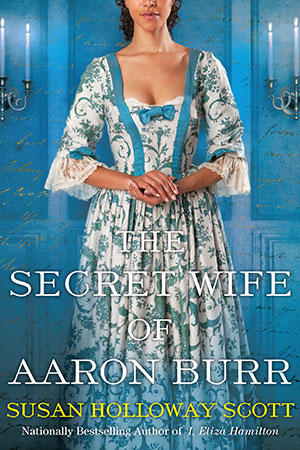
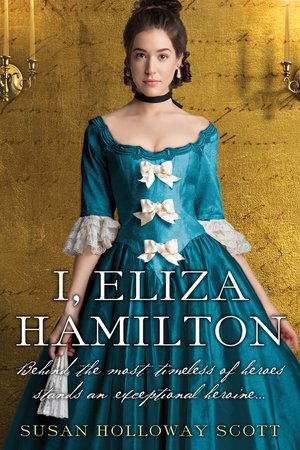
Secondly: My new novel is I, ELIZA HAMILTON, coming in September from Kensington Books. (It's available for pre-order now in both paperback and ebook, through those links over to the right.)

Elizabeth Schuyler Hamilton (1757-1854) was the wife of Alexander Hamilton (c1755-1804), a Revolutionary War hero, statesman, politician, and abolitionist, the first Secretary of the Treasury, a signer and promoter of the Constitution, the founder of the American financial system, and, perhaps most famously for posterity, the only Founding Father killed in a duel.

You might also have heard that he inspired a certain Broadway musical that carries his name.

Like so many women of the past, Eliza's story has been overshadowed by her brilliant husband. She didn't help her place in posterity by destroying most of her own letters and virtually eliminating her voice. As a result, she's too often been dismissed by (male) historians, who variously describe her as shy and reclusive, a homebody, a saint.

But the real Eliza's still there: in the letters of others who knew her, in diaries, in portraits, in memoirs, and most of all, in the achingly beautiful love letters her husband wrote to her over the years of their courtship and marriage. She was a mother, daughter, sister, and wife. She was intelligent and resourceful and strong, a woman who lived in the thick of some of the most turbulent and exciting times in American history. Her marriage was filled with love, passion, regard, and devotion, but also marred by public scandal and unimaginable tragedies that broke her heart, but not her spirit. I'm honored to tell her story.

Over the next months, I'll be sharing more here on the blog about Eliza and her life and times, as well as discoveries from my research junkets. You can also read a bit more about the book here in a recent post on Bustle.com.

Sunday, January 29, 2017

Still Working, But We'll Be Back Soon

Sunday, January 29, 2017
Fuseli, The Nightmare
Loretta & Susan report:

No, our books are not yet done, which is why you haven’t seen a blog post in some time. 

The good news is, the finish line is in view, even if the view is kind of blurry at the moment—though that might be due to lack of sleep or brain fatigue.

We apologize for the overlong blank stretch—believe us, it hasn’t been a holiday, by any means, and the picture doesn't exaggerate. We thank you for your patience and for all the kind words and positive thoughts you’ve sent our way.

If all goes reasonably well, we’ll return to our regularly scheduled blogging by the second week of February, if not sooner.

Image: John Henry Fuseli, The Nightmare (1781), from the collection of the Detroit Institute of Arts
 
Clicking on the image will enlarge it.  Clicking on the caption will take you to the source, where you can learn more and enlarge images as needed.

Tuesday, January 10, 2017

Fashions for January 1801

Tuesday, January 10, 2017


Morning Dress 1801
Loretta reports:
We’ll kick off the 2017 monthly fashion plates by returning to the beginning of the 19th century—and incidentally get a lesson in differences in digitization technology. The first plates and the description are from a Google scan of the New York Public Library’s copy of The Lady’s Monthly Museum for January 1801. They look like the work of an inept artist, don’t they?

Afternoon Dress 1801
Now let's look at the last image, which came from the Los Angeles County Museum of Art’s online collection. This is the same “Afternoon Dress” fashion plate as above, but what a difference! (Unfortunately, I haven’t been able to find a high quality counterpart to the Morning Dress plate.)

Afternoon Dress
Many libraries have fine images like this of fashion plates. The trouble is, in most cases—as I’ve complained repeatedly—all we have is the plate. The rest of the magazine, including the description, is who knows where.


Let's hope that the magazines Google digitized in the early days haven't been destroyed, and will one day be re-scanned using improved technology.

Images, from The Lady’s Monthly Museum Vol 6 Jan-June 1801 courtesy Hathi Trust. Second Afternoon Dress image courtesy Los Angeles County Museum of Art.


Clicking on the image will enlarge it.  Clicking on the caption will take you to the source, where you can learn more and enlarge images as needed.

 
Two Nerdy History Girls. Design by Pocket