Showing posts with label hair. Show all posts

Friday, September 21, 2018

Friday Video: Recreating Madame Récamier's Coiffure

Friday, September 21, 2018

Chinard, Mme Récamier
Loretta reports:

I have mentioned Madame Récamier before, mainly in connection with furniture (here and here). She is quite well known among Regency/Napoleonic era aficionados, both for her portraits and her salon.

The Gérard and David portraits of her will be familiar to many. However, being mainly interested in the chaise longue, I hadn’t really noticed the marble bust by Joseph Chirard, until I came upon Janet Stephens’s video. Ms Stephens has posted several YouTube videos explaining Greek and Roman hair styles, which in turn help us get a better sense of the powerful influence of Greek and Roman statuary on this period of fashion in Europe and America.


Image: Bust of Juliette Récamier by Joseph Chinard, in "Musée des Beaux-arts" of Lyon (France), photo by Philippe Alès, Creative Commons license.
Please click on images to enlarge.
Readers who receive our blog via email might see a rectangle, square, or nothing where the video ought to be. To watch the video, please click on the title to this post (which will take you to our blog) or the video title (which will take you to YouTube).

Sunday, August 20, 2017

The "Keenest Sorrows" in August, 1804, After Alexander Hamilton's Death

Sunday, August 20, 2017
Susan reporting,

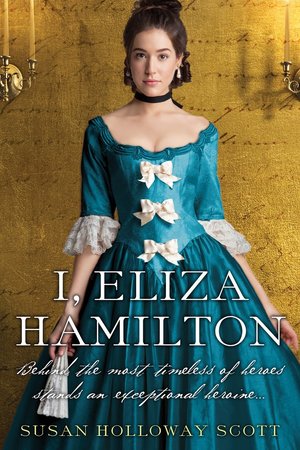
One of the more interesting books that I discovered in my research for my new book I, Eliza Hamilton was a solemn compendium with a monumental title: A Collection of the Facts and Documents, Relative to the Death of Major-General Alexander Hamilton: With Comments: Together with the Various Orations, Sermons, and Eulogies, that Have Been Published Or Written on His Life and Character. 

Published not long after Alexander Hamilton died from wounds incurred in his infamous duel with Aaron Burr in July, 1804, the book is exactly what that title says it is. Today's publishers often rush such titles to press to cash in on a topical event, usually branding them as "special souvenir collector's editions" and the like, but in 1804, this was unusual. Then again, the circumstances were unusual, too. The country - and particularly Hamilton's hometown of New York City - were stunned by news of a duel between the former Secretary of the Treasury and the current Vice President, and shocked by Hamilton's subsequent death.

The outcry was immediate. Even those who didn't fault Burr and felt that duels of honor still had their place between gentlemen (the practice was already illegal in New York), no one could deny the tragic waste of Hamilton's life, or the terrible effect his death had on his widow and young family. Charges of murder were filed against Burr, who had fled New York for the more sympathetic southern states. The city of New York was plunged into official, black-draped mourning. More pointedly, ministers deplored the sinful practice of dueling from their pulpits.

A Collection....was assembled by William Coleman, a former lawyer (and former law partner of Aaron Burr) who had been chosen by Hamilton in 1801 to be the editor of the Federalist newspaper, The New York Evening Post. Coleman himself was no stranger to duels; earlier in 1804, he had killed a man in a duel over a dispute with a rival newspaper.

Nor was Coleman an impartial editor. In the preface, he described Hamilton as "my best earthly friend, my ablest adviser, and my most generous and disinterested patron." He quickly put together the collection both as a tribute to Hamilton, and a defense of his friend's actions relating to the duel, and the book was published before the end of the year. A 1904 edition of A Collection.... is available to read for free online here.

One article in particular - from the August 29, 1804 edition of The Albany Centinel - touched me the most since it focussed on Eliza. Immediately following her husband's death, Eliza was so distraught that friends and family feared for her sanity. She did not attend the funeral, and soon retreated with her daughters and younger sons to her father's house in Albany. Yet by the end of August, she must have been beginning to appear again in public - though as this excerpt shows, her grief was clearly still painfully raw.

"On Sunday morning the afflicted Mrs. HAMILTON attended divine service in the Presbyterian Church in this city, with her three little sons [I'm guessing that this must have been her youngest sons, John Church, 12, William Stephen, 7, and Little Phil, 2.]

"At the close of a prayer by the Rev. Mr. Nott, the eldest boy dropped on his face, in a fainting fit.

"Two gentlemen immediately raised him, and while bearing him out of the church, the afflicted mother sprung forward, in the agonies of grief and despair, towards her apparently lifeless son.

"The heart-rending scenes she had recently struggled with, called forth all the fine-spun sensibilities of her nature – and seemed to say, that nature must, and will be indulged in her keenest sorrows – She was overpowered in the conflict, and likewise sunk – uttering such heart-rending groans, and inward sighs, as would have melted into mingled sympathies, even Burr himself.


"Both of them soon recovered – and while the little son was supported standing on the steps, yet speechless, the most affecting scene presented itself – a scene, could it be placed on canvas by the hand of a master, would be in the highest degree interesting and impressive. The mother, in this tender situation, fastened herself upon the son, with her head reclining on his left shoulder – the agonies so strongly painted on her countenance – her long flowing weeds – the majesty of her person – the position of both – and above all, the peculiarity of their trying situation in the recent loss of a husband, and a father – who could refrain from invoking on the head of the guilty author of their miseries, those curses he so rightly merits? The curse of living despised, and execrated by the voice of a whole nation – the curse of being held up to the view of future ages – a MONSTER, and an ASSASSIN."

Poor Eliza!

Above: Gold mourning ring, containing the braided hair of Gen. Alexander Hamilton, presented to a friend of Hamiltons by his wife in 1805. New-York Historical Society.
Below: Title page, A Collection of the Facts and Documents, Relative to the Death of Major-General Alexander Hamilton.... New York: Printed by Hopkins & Seymour for I. Riley & Co, 1804. Collection, University of California Libraries.

Read more about Eliza Schuyler and Alexander Hamilton in my latest historical novel, I, Eliza Hamilton, now available everywhere.

Friday, May 19, 2017

Friday Video: Styling Early Victorian Hair

Friday, May 19, 2017
Loretta reports:

My most recent books are set in the 1830s, just before Victoria ascended the throne. Nearly up until about the time she became queen, women’s hair styles were upward bound, wild and crazy and, in my and my heroes’ opinions, highly entertaining.

But about 1836-37 the wild exuberance disappears. Hair sinks from its lofty heights to cling to the scalp, and even the fanciful braids and loops hang rather than leap into the stratosphere.

Still, whether I love the style or not—and I do see the appeal of this as I do other fashions—I love discovering the method of creating it. This video is particularly interesting to us Nerdy History Girls, because it explains how to make the Victorian equivalent of hair spray.

My ladies (1820s-1830s) rely upon pomatums (or pomades), a rather thick concoction, described here and here. Ms Goodman offers quite a different product, called bandoline, of which I was unaware. Also, she’s a treat to watch.

BTW, though I’ve owned Ms. Goodman's How to Be a Victorian for some time, all I’ve had time to do so far is skim. This one is going on the plane with me to England, for sure!


Still  and video from Ruth Goodman's Victorian Hairstyling 101 video on YouTube.


Readers who receive our blog via email might see a rectangle, square, or nothing where the video ought to be.  To watch the video, please click on the title to this post.

Thursday, March 23, 2017

Alexander Hamilton's Powdered Hair, c1796

Thursday, March 23, 2017
Susan reporting,

Yesterday I wrote here about how Elizabeth Schuyler Hamilton (the heroine of my new historical novel, I, ELIZA HAMILTON) followed the latest fashion for hedgehog-inspired hair, a style made popular by Marie Antoinette. Curled and frizzled, pomatumed and powdered, the hairstyle would have been the work of a skilled hairdresser, and probably taken considerable time to achieve, too.

For her husband Alexander Hamilton, that same powder and pomatum was a near-daily ritual. Today we look at portraits of the Founding Fathers and think the American Revolution was the work of a bunch of old men. This wasn't the case: many of the members of the Continental Congress were in their thirties, or even their twenties, and the soldiers fighting in the army were even younger. Even George Washington was only in his early forties when he became the Commander-in-Chief. However, many of the portraits of the Founders that we see today were painted when these men were much older and more venerable. In addition, many of them powdered their hair, which made them appear prematurely grey.

While many 18thc gentlemen wore wigs - signs of status as well as fashion - American military men often took their cue from Washington, who always wore his own hair instead of a wig. Washington's hair was naturally reddish-brown, but always hidden under a thick coat of pomatum and white powder, exactly as used by the ladies (more about powder and pomatum here.) But while the ladies were hoping for plenty of big-hair-volume, Washington expected his pomatum regimen to hold his hair neatly in place and out of the way, sleeked back from his forehead, clubbed, and bound in a queue at the nape of the neck with a black silk bow. He expected his officers to do the same, a show of military uniformity and neatness, and many of the men continued to wear a variation of the style long after the war was over and their military days done, or at least as long as they still had the hair for it.

Among these officers was Colonel Alexander Hamilton. Washington's most trusted aide-de-camp during the war and a bonafide hero in battle, Hamilton always enjoyed the display of a well-cut uniform, and was proud of retaining his military bearing throughout his life. By the 1790s, many American men had already abandoned wigs and the now-old-fashioned pomatum and powder except for the most formal occasions. Younger men were cutting their hair short, too. But Hamilton preferred to retain the smart military look of well-dressed hair from his days as a young man in the Continental Army, much the way some modern former soldiers continue to wear very short or shaved haircuts even after returning to civilian life.

Hamilton's hair was serious business, with payments to his barber listed in his cash books. His third son, James Alexander (who was born in 1788, making this recollection likely from the late 1790s, when Hamilton was working as an attorney in New York City), recalled his father's ritual with the barber:

"I recollect being in my father's office in New York when he was under the hands of his hair-dress[er] (which was his daily course). His back hair was long. It was plaited, clubbed up, and tied with a black ribbon. His front hair was pomatumed, powdered and combed up and back from his forehead."

The pastel drawing, above, was a portrait that the Hamilton family regarded as one of the best likenesses, showing his handsome profile and half-smile. It's also a splendid view of that well-dressed hair tied with the black ribbon. It appears to cut shorter and fuller in front, with the back long (I'm resisting mullet references.) I especially like how there's a dusting of hair powder on the collar of his black coat - once the sign of a well-groomed gentleman.

Fun fact: George Washington, Alexander Hamilton, Thomas Jefferson, and Gilbert du Motier, the Marquis de Lafayette were all described by contemporaries as having various shades of red hair. Who knew, under all that powder?

Above: Alexander Hamilton by James Sharples, pastel on paper, c1796, New York Historical Society. 

Read more about Eliza Schuyler and Alexander Hamilton in my latest historical novel, I, Eliza Hamilton, now available everywhere.

From Paris to New York City: Hedgehog Hair, c1785

Susan reporting,

It's a still-too-popular myth that early Americans were unfashionably plain and self-sufficient, wearing simply braided hair and clothes of homespun fabric. In this unrealistic vision of 18thc life, women not only tended the sheep, but spun the wool, wove the thread into fabric, and then cut and sewed all the clothes for their family.

Well, no. Very little fabric was produced at home, and nearly all of it was imported. People who lived along the coast were eager to follow the fashions of Paris and London, and the latest styles were imported along with fine woolens, silks, cottons, and linen. Even settlers and Native Americans living on the frontier traded for woolen cloth made in England. European visitors were surprised by how fashionable Americans were, and how the ladies in Philadelphia, Charleston, and New York followed the same trends as their sisters abroad.

These two portraits show how swiftly and thoroughly fashion came across the Atlantic. The portrait, left, of Marie-Antoinette, Queen of France, was painted by Élisabeth Vigée Le Brun in 1785. The queen wears her hair in the latest style, a la hérisson, or the hedgehog, devised by her hairdresser Léonard-Alexis Autié. Monsieur Léonard (as he was known at court) cut the front of the queen's hair shorter, brushed it with a scented "hard" pomade made from beeswax, curled it on narrow rollers or with heated tongs, and frizzed it for extravagant volume. Unlike today, frizz was an 18thc lady's best friend, and the more, the better. Loose falling side curls towards the back soften the effect. Finally the entire hair is dusted with a starchy powder to whiten it. (See here, here, and here for more about 18thc hair powder and pomade.)

The queen not only favored this hairstyle, but found it was a good "support" for the oversized turbans, plumes, and poufs she liked to wear during this period. While white-powdered hair was beginning to fall from fashion - it disappeared for good with the French Revolution - the queen continued to powder her fair hair to an even whiter pallor, the better to show off her complexion in contrast.

Variations on the hedgehog style were popular throughout the 1780s. Many of the ladies in portraits by Thomas Gainsborough sport hedgehog-inspired hair, and the hairdressers of the recent movie The Duchess gave Kiera Knightley wigs with stupendous hedgehogs.

In 1787, the style was being worn in New York City, too. The second portrait, right, by American artist Ralph Earl, is of Elizabeth Schuyler Hamilton, wife of then-member of the Continental Congress Alexander Hamilton; she's also the heroine of my upcoming book I, ELIZA HAMILTON. The Hamiltons were a fashionable young couple in Federalist New York City and in Philadelphia, attending the theatre, balls, and dinners with equally fashionable friends, and would have been very aware of European styles in hair and dress.

In her portrait, Eliza has clearly followed the royal trend-setter. Some historians (male, and dismissive of fashion history) describe her as wearing a wig, but that's her own hair, frizzed and powdered into an elegant hedgehog. It's a surprisingly close copy of the queen's hair, down to the horizontal falling curls at the back, although Eliza chose a simpler headdress of fine linen or silk gauze instead of Marie-Antoinette's plumed turban.

That snowy white hair must have taken a considerable amount of powder to achieve, too, for beneath it Eliza's natural hair color was described as a very dark brown, almost black - you can see it showing through the powder. So much powder made a statement of affluence as well. Hair powder was considered a luxury good, and while flour could be substituted as a low-cost alternative in a pinch, the best powder was imported, a finely ground mixture of starch, bone, and orris root for scent. It's likely that Eliza wore her hair this heavily powdered only for special occasions, and by the time she sat for another portrait in the 1790s, she'd given it up, and is shown wearing her own dark hair. There is, however, a record of Eliza receiving a gift of hair powder in 1780 from Martha Washington - a thoughtful present from another 18thc lady who enjoyed a good powdering.

Above left: Marie Antoinette with a Rose by Élisabeth Vigée Le Brun, 1783, Metropolitan Museum of Art.
Lower right: Portrait of Elizabeth Schuyler Hamilton (Mrs. Alexander Hamilton by Ralph Earl, c1787, Museum of the City of New York.

Monday, November 7, 2016

From the Archives: Creating Fashionable Coiffures in 1828

Monday, November 7, 2016


1828 hair styles & headwear
Loretta reports:

In my book Lord of Scoundrels, set in 1828, the hero finds the heroine's clothing and hair amusing. I know that when our readers see the fashion plates for the 1820s and 1830s, many feel the same way. But I love Romantic Era fashion, especially the extravagant sleeves and nutty hairstyles. There's an exuberance I find irresistible. The hair, especially, climbing ever upwards, charms me. But one does wonder how this sort of architectural arrangement was managed in the days before hair spray and gels.

Isabella/Susan to the rescue! She sent me a link to a site where historical hairstyles are recreated.  This inspired me to investigate how it was done and what hair products they used.  So I turned to my trusty The Lady’s Stratagem.
One style we see again and again involves two or more big loops sprouting from the top of the head.  In fashion plates, these present an interesting hairstyling puzzle, which the recreations (Photo 2, top row.  Photos 1 & 2, second row) help solve.  According to The Lady’s Stratagem, the hair can be tied first or:

“Just as commonly, the hair is not tied:  you gather it and hold it very firmly In your left hand, twist it with this same hand, and immediately place the comb on it to hold it.  Then you make nœuds d’Apollon or Apollo knots; so are called the large loops of hair on the summit of the head.  This style has been in fashion for a long time; every one says that it will last.”
And it did, well into the 1830s, until about 1836-7, when fashion went droopy.
Since the instructions quoted in The Lady’s Stratagem are lengthy, I can only refer you to that book for the details on creating this style—or, if your French is better than mine, you can follow the directions in Arte de se coiffer soi-même, enseigné aux dames (1828) (here or here).

From what I can determine, one of the hair oils we’ve seen advertised or similar product or a pomade was used to keep hair smoothly in place.

Images: upper left, courtesy Los Angeles Public Library; lower right from Arte de se coiffer soi-même, enseigné aux dames, courtesy Bibliothèque nationale de france.

Clicking on the image will enlarge it. Clicking on the caption will take you to the source, where you enlarge further and find out more.


Thursday, February 4, 2016

The Hairdresser, 1827

Thursday, February 4, 2016
Hairdresser
Loretta reports:

The Book of English Trades was a guide aimed mainly at a young audience, explaining what people did and what they were paid. It continued to appear, year after year, and you can find it online in many editions. The clippings here are from the 1827 edition.

You can read the full entry online beginning here.


Clicking on the image will enlarge it.  Clicking on the caption will take you to the source, where you can learn more and enlarge images as needed.

Thursday, November 12, 2015

Return Engagement: Arrows in the Hair, 1805-1830

Thursday, November 12, 2015

Isabella reporting,

If you followed Loretta's directions for creating a fashionable early 19th c. hair style and the hair pomade to keep it in place, you're now ready to finish off your Apollo's Knot coiffure with a trendy ornament. Flowers, jewels, and plumes were most customary, but according to fashion plates and portraits, another popular option was an arrow.

The point and shaft of the arrow was thrust through the top of the hair, like a narrow miss by William Tell (though in the fashion plate right, the arrow must have been made in two pieces, to make both ends stick out the front of the hair. An ornament that likely began as a Neo-Classical whim - think an arrow from the quiver of the huntress-goddess Diana - seemed to slide into the Romantic Era with more sentimental connotations. The ornaments were called Cupid's Arrows or Cupid's Darts, and most appear to be brass or other gold-toned metal.

I say "appear" because I haven't been able to find any examples in on-line museum collections. My guess is that the arrows were the kind of fast-fashion hair accessory that wasn't made to last, and wasn't kept. Still, if any of you have come across a Cupid's Arrow hair ornament, I hope you'll share it – Loretta and I would love to see it!

Top left: Detail, Portrait of Nanette Kaula, by Joseph Karl Stieler, c 1829. Schönheitengalerie.
Top right: Detail, women's fashions plate, 1831.
Bottom left: Detail, Mme. Giuseppina Grassini, by Louise Élisabeth Vigee Le Brun, c. 1805. Private collection.
Bottom right: Detail from La Reunion, fashion plate, c. 1832.

Friday, November 6, 2015

Friday Video: Two-Tone Hairstyles from 1956

Friday, November 6, 2015


Isabella reporting,

While modern actresses and pop-singers are sporting pastel and ombre hair color, this video from British Pathé shows that they're not the first to dye their hair in Easter egg hues. These colorful styles from 1956 are the work of British hairdresser Raymond Bessone (1911-1992), also known as Mr. Teasie-Weasie for his deft work with a comb. The models in their evening gowns turn their heads in stately slow-motion and the orchestral music swells as Mr. Bessone adds his masterful touch to their hair. Clearly this was Serious Fashion.

I don't believe sea-foam green hair ever really caught on in the 1950s. But I was fascinated to see that one model in this clip is also sporting green nail polish - another fashion that's made a fresh appearance in the 21st century. Once again, when it comes to fashion, what's old is new.

Thanks to Kimberly Alexander for suggesting this video.

If you receive this post by email, you may be seeing an empty space or black box where the video should be. Please go here to view the video.

Thursday, September 10, 2015

Victorian Mourning Jewelry at the Oaks

Thursday, September 10, 2015
Loretta reports:

In a place like the Historic Paine Estate, the Oaks, treasures can turn up anywhere, as Jennifer Willson has discovered. In this case, she opened a teapot and found this white sapphire hair bracelet inside. This is one of many items which leave us wondering: Whose was it? When was it made?

Unfortunately, details on many of the treasures are lacking, but my research indicates that hair jewelry became especially popular from the 1850s. In some cases, it was a craft practiced at home. Godey’s was no doubt one of many magazines offering patterns and instructions.  However, the making of hair and mourning jewelry was a commercial enterprise as well.

Something new in hair work.—Madame L. Kampmann, of this city, has undertaken to get up for us, mourning pins composed of hair. Weeping willows, tombs, trees, &c., on ivory , making a very pretty picture. They will be furnished set in gold, for a breast pin, for $12.00
Godey’s Vol 52-53 1856

Why mementos made of hair?  The following, from an 1825 New Monthly Magazine piece, “Criticism on Female Beauty,” is extensively quoted (without credit to the source) well into the late 1800s.

Hair is at once the most delicate and lasting of our materials; and survives us, like love. It is so light, so gentle, so escaping from the idea of death, that with a lock of hair belonging to a child or a friend, we may almost look up to heaven, and compare notes with the angelic nature; may almost say, " I have a piece of thee here, not unworthy of thy being now."
The New Monthly Magazine, Volume 14 1825
The set at left, in better condition—although the bracelet is missing its stone—is dated to about 1860. as always, if anybody can shed further light on any of these items, the help will be greatly appreciated. Jennifer is trying to catalog the items, with the aim of eventually making the collection available online.

If you’re in the area, you can examine the house's treasures up close and personal at the Oaks on 12 September and 3 October 1-4PM as well as during the Christmas Open House in early December. For special group tours, please contact the DAR Colonel Timothy Bigelow Chapter: col.timothybigelowchapter@gmail.com.


Thursday, August 20, 2015

From the Archives: The Truth about the Big Hair of the 1770s: Part II: How They Did It

Thursday, August 20, 2015

Isabella reporting,

Here's the second part of our popular "big hair" posts, continuing where Part One left off. Thanks again to Abby Cox for sharing her research with us!

Considering the towering hairstyles worn by women in the 1770s, the question that inevitably comes to mind is "how did they do it?" For the answer, I turned to two of our friends from Colonial Williamsburg, the manuta-maker's apprentices of the Margaret Hunter shop: Abby Cox and Sarah Woodyard.

These two young women not only dress in the clothing of the 1770s on a daily basis, but they are constantly researching the period to make their "look" as authentic as possible. Because they participated in the fashion trades, 18th c. milliners, mantua-makers, and their shop assistants dressed in the latest styles as a form of advertising as well as personal preference. This can be seen in prints like the one, right, where the milliners are wearing elaborate hair and caps. (For a photograph of the Margaret Hunter shop's interpretation of this print for a recent conference, see here - plenty more big hair!)

As part of her apprenticeship, Abby has been searching primary sources and prints for the secrets of these hairstyles, and of Georgian hair-care in general. Here are a few of her findings (and many thank to her for sharing them!)

First, forget 21st notions of bouncy, squeaky-clean hair. Eighteenth-century women did not scrub their hair clean, so much as cleanse it. Instead of daily lathering of soap and water (which can damage hair), they worked pomatum into the hair with their fingers, added powder, and then brushed and combed vigorously. The pomatum could have been made at home or purchased, and consisted of animal fat plus fragrance. The powder would have included some sort of finely-ground starch, with ground sheep or beef bones and ground orris-root for a light floral scent.

Following an 18th c. recipe, Abby made pomatum of mutton fat and pig's lard with essence of lemon and clove oil, to be kept in a jar. I can report that this mixture smelled absolutely, delightfully spicy – plus, as Abby noted, clove oil is a natural flea and tick repellent. The recipe for her hair powder came from The Toilet of Flora, first published in 1772 (and here online.) Think of the pomatum as a rich, deep conditioner applied as a kind of scalp massage, followed by the powder as dry shampoo. This treatment is hardly limited to the Georgians, either. Indian women, known for their beautiful, long hair, have long followed a similar cleansing regimen of oiling and combing.

This process was done frequently, too. No matter how elaborate the style, Georgian women always took their hair down at night and combed it out. For many women, this was likely a relaxing, aromatherapeutic ritual for the end of the day - although there were no doubt some lazy, slovenly hussies who didn't, giving rise to the myths about maggots.

Hair that had been treated like this made styling much easier, just as modern hairdressers rely on powdered dry shampoo to add texture and body before attempting up-dos. More powder was dusted on before styling to achieve the fashionable matte, "dusty" look of powder and to make dark hair paler. Unlike the beehives of the 1950's-60's, Georgian women did not tease their hair, but added extra volume with padded forms called rollers and cushions, middle right. Think of them as the 18th c. answer to Bumpits.

Sewn of wool cloth to match the wearer's hair, these were shaped pillows stuffed lightly with down or sheep's wool. The hair was wrapped around, (that's Abby demonstrating, middle left), or pulled through the forms, and smoothed and pinned (with u-shaped hairpins) into the desired shape. Side curls could be rolled and pinned into place, and extra touches could include braids or false curls. (Wearing a more elaborate style, above left, is the third of the shop's summer interns, Rebecca Starkins, a PhD candidate at N.Y.U. in English literature.) There was no mousse, gel, or hairspray; the pomatum and the powder offered the necessary staying-power.

How long would all this take a busy 18th c. apprentice before she appeared for work? If Abby and Sarah are any indication, not long at all. They accomplished these elaborate styles in about ten to fifteen minutes, or less time than many modern young women spend with blow-dryers and flat-irons. A skilled 18th c. professional hairdresser would have been able to perform the basics in less time, plus construct a more towering edifice of hair complete with flowers, ribbons, and strands of pearls.

More impressive still is the fact that both Abby and Sarah have both given up modern hair care products altogether, and "practice what they preach" with pomatum and powder. When they go visit their (modern) hairdressers for a cut, they're greeted with amazement, for their hair is healthy, strong, and thick - and, they swear, in better condition than ever. Hmm...perhaps the old ways ARE the best.

For the record: The length of Abby's hair is just below her shoulders, Sarah's is to the middle of her back, and Rebecca's is to her waist. Many thanks to them all!

Upper right: detail, A Morning Ramble, or - The Milliners' Shop, published by Carington Bowles, 1782. The British Museum.
Photographs by the Margaret Hunter Shop and Susan Holloway Scott.
 
Two Nerdy History Girls. Design by Pocket