Showing posts with label uniforms. Show all posts

Thursday, June 21, 2018

Friday Video: Was This Jacket Worn at the Battle of Waterloo?

Thursday, June 21, 2018

Susan reporting,

"Provenance" is an important word among museum curators, and refers to the history of an artifact or artwork. Sometimes the provenance is detailed and indisputable, a sure trail from one owner to another. More often, however, facts become a bit hazy, particularly with historical garments. Family traditions and wishful thinking often contribute to create breathless stories about how "this dress was worn by my great-great-great-grandmother when she danced with the Marquis de Lafayette", and are often taken with a big grain of salt by curators.

The uniform jacket featured in this video had a tradition of having been worn by Sir Thomas Noel Harris, Brigade-Major, at the Battle of Waterloo. He danced at the Duchess of Richmond's ball before being called to join his regiment, and then fought unscathed until the last day of the battle. A musket ball - or perhaps two? - pierced both his arm and his side, severely wounding him.  He lay among the dead and dying on the battlefield overnight, until he was discovered by a searching family member and taken to a dressing station. There his arm was amputated, but he did survive and recover, and continue to serve in the army.

But was this really Sir Thomas's jacket, and was it in fact worn by him at Waterloo? This video shows the different scientific tests used by the Cranfield Forensic Institute to answer that question. It's a fascinating mix of CSI-style forensic examination plus the known history of the jacket, the wearer, and the battle.

If you received this post via email, you may be seeing only a black box or empty space where the video should be. Please click here to view the video.

Friday, May 25, 2018

Friday Video: The Uniforms of the Household Cavalry

Friday, May 25, 2018

Susan reporting,

Since the post earlier this week featuring the frock coat worn by the newly married and newly minted Duke of Sussex was so popular, I thought I'd share a video with more royal uniforms and history. In addition to a discussion of the various kits of the Household Cavalry (the Life Guards and The Blues and Royals), there's information about the Cavalry's musicians and their splendidly gaudy gold uniforms that date back to Charles II, as well as the Cavalry horses - including the very large horses who support the double kettle drums during parade.

Another thanks to historian, author, and historic paint consultant Patrick Baty for suggesting this video.

If you receive this post by email, you may be seeing a blank space or black box where the video should be. Click here to view the video.

Tuesday, May 22, 2018

What the Groom Wore: Prince Harry's Frock Coat

Tuesday, May 22, 2018
Susan reporting,

Like millions of other people willing to get up extra early on a Saturday morning, Loretta and I have been enthralled by this week's royal wedding of Ms. Meghan Markle and His Royal Highness Prince Henry of Wales. One thing that fascinated us the most was the dashing dark uniform that Prince Harry chose to wear to his wedding.

The long coat is described as a frock coat, and is particular to the Household Cavalry, which is formed of two regiments - The Life Guards and The Blues and Royals - while another version with slightly different cuffs is also worn by the Foot Guards. (The style of the knee-length frock coat evolved from men's 19thc fashion, with additional inspiration from the Ottomans.) It was worn in "Undress" instead of Full Dress, most likely because the choice of Windsor Castle made the wedding a less formal affair. This was not a state occasion, nor will Harry be king. Harry's brother William, Duke of Cambridge, wore the same uniform for the ceremony, and miniature adaptations were created for the bride's page boys.

Both brothers' uniforms were created by traditional military tailors Dege & Skinner on Savile Row, and were said to have taken over 100 hours to stitch and tailor by hand. Details are everything, even in a seemingly monochrome coat: the intricate interwoven braid on the sleeves (which was barely visible on television) took a single skilled craftsman over a week to create. The frock coat's primary fabric is doeskin, a fine satin-weave woolen cloth, and the lining is silk.

The frock coat is closed with hidden hooks instead of buttons. Many Americans were perplexed by what they saw as "ribbon bows" on the front of the jacket. This is instead a braiding made of black mohair, and is unique to the Household Cavalry and the Life Guards. While the braid loops appear to fasten to the olivets (the toggle-style buttons on the far sides of the chest), they are purely decorative.

The illustrations, right, are from Dress Regulations for Officers of the Army 1900, and show the approved pattern of the Frock Coat of the Household Cavalry. The illustrations show the details of the frock coat that weren't visible in the wedding broadcast (click on the image to enlarge.)

While the very dark navy color made for a striking contrast to Meghan's bright white gown, it's not simply a style choice, but a uniform that Harry has earned the right to wear. He served as a Captain in The Blues and Royals, and after retiring from active duty in 2015, he received the honorary military title of Major from the Queen, as signified by the crown on his shoulder. According to Kensington Palace, he also requested and received express permission from the Queen to wear the uniform on his wedding day.

Rumor has it that the Queen also bestowed a certain leniency to Harry in another way. Officers in the Army are required to be clean-shaven, and there was speculation that Harry would shave away his now-familiar beard for the wedding. The fact that he didn't suggests that the Queen gave him special permission to keep the whiskers.

One more detail: did you notice that both brothers wore silver spurs as members of the cavalry?

Many thanks to historian, author, and historic paint consultant Patrick Baty for his always-excellent assistance with this blog post. 

Upper left: Neil Hall/Pool/Reuters
Lower left: PA/UK Images

Thursday, April 26, 2018

What Ordinary People Wore in the Early 1800s

Thursday, April 26, 2018
1808 Woman Churning Butter
Country Fair 1808
Loretta reports:

Given comments on my last blog, it seemed like a good time to look at resources for what working people wore. Susan and I have written about tradespeople and servants here, here, here, here, here, and elsewhere.

They are rarely the subjects of portraits, although they might be included in scenes of, say, a great estate. Also, a few employers actually had at least some of their servants’ portraits painted. Later in  the 1800s, Victorian servants appear in quite a few photographs. But for those of us who are looking at English dress before photography, there are other ways to get an understanding of what ordinary people wore.

William Henry Pyne is one of my go-to illustrators. I have two reprints of his work dealing with this subject: Picturesque Views of Rural Occupations in Early Nineteenth-Century England and Pyne's British Costumes.

Online, there’s also his Etchings of rustic figures, for the embellishment of landscape.

Rustic figures
Rustic figures
Other sources include satirical prints. Though we need to be aware of exaggerations, they generally seem to get the clothing details right. Images in Ackermann’s Microcosm of London show ordinary people as well as those of the upper orders.

In some cases, we see a distinctive uniform for a trade or profession. The watermen or firemen, for instance. Others might wear a certain type of vest. Many professions and trades required badges. Whether one’s clothes were in fashion or not would depend on one’s business. A dressmaker, for instance, would need to look up-to-date. For haymakers, it was another case entirely.

Images:
14. A woman churning butter with a cloth apron tied about her waist and a mob-cap on her head, another woman milking a cow beyond. Title page lettered "The Costume of Great Britain. Designed, Engraved , and Written by W. H. Pyne." "London: Published by William Miller, Albermarle-Street. 1808." Courtesy the British Museum
Couple at fair looking at a clown and a bell ringer, W.H. Pyne, [1808], courtesy Library of Congress Prints and Photographs Division Washington, D.C. 20540 USA
Rustic figures from Pyne, Etchings of rustic figures, for the embellishment of landscape.

Rowlandson, Thames Watermen from Miseries of London 1807I courtesy the Metropolitan Museum of Art.

Clicking on the image will enlarge it.  Clicking on the caption will take you to the source, where you can learn more and enlarge images as needed.

Tuesday, December 5, 2017

What Did Alexander Hamilton Wear for His Wedding to Elizabeth Schuyler in 1780?

Tuesday, December 5, 2017

Susan reporting, 

This post appeared earlier this fall on the blog that's connected to my web site, but since it was so popular there, I decided to share it here, too.

In early December 1780, Lt. Col, Alexander Hamilton finally received leave from his position as an aide-de-camp on Gen. Washington's staff, and headed north to Albany, NY to marry his fiancee Elizabeth Schuyler. It was his first leave away from the army since accepting the post in 1777. The young lieutenant colonel had performed his responsibilities so well that he'd become virtually indispensable to His Excellency, who only grudgingly granted the leave, and only for a few short weeks at that.

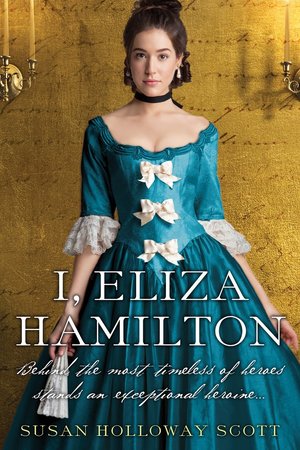
The wedding was small family affair, with the service taking in the parlor of The Pastures, the Schuyler family home overlooking the Hudson River. There are no surviving records of what either the bride or groom wore for the ceremony, or for the celebration that likely took place afterwards. The description of Eliza's gown that you'll find in my historical novel I, Eliza Hamilton is drawn from a suggestion for bridal dress for a fashionable winter wedding in a 1780 copy of The Lady's Magazine, the Georgian precursor of magazines like Vogue, and I also consulted with Janea Whitacre, the Mistress of the Mantua-Making Trade at Colonial Williamsburg.

In a letter that Alexander wrote to Eliza shortly before embarking for Albany, he asked if she'd prefer him to wear his uniform for their wedding, or civilian clothes. Alas, her reply is lost, so it's not known what decision she made for her groom. I'm guessing that she chose his military attire, given that it was a war-time wedding.

None of Alexander's uniforms from the Revolution are known to survive today. Uniforms from the war saw considerable hard wear, and only a handful from the entire Continental Army still exist. Among them is the uniform, above left, that was worn by another of Washington's aides-de-camp, and one of Alexander's close friends, Lt. Col. Tench Tilghman (1744-1786) of Maryland. As shown on a museum mannequin, the uniform is missing some key elements: a white linen shirt, gold officer's epaulettes, a sword and sword belt, boots, cocked hat, and the green ribbon sash worn by members of the general's staff. The portrait, above right, shows Gen. Washington himself, with the Marquis de Lafayette in the middle, and Lt. Col. Tilghman to the right, all in uniform.

Alexander's uniform at the time of the wedding was likely very similar. The miniature portrait by Charles Willson Peale of Alexander, below left, shows him in that uniform.

Now I have a totally unsubstantiated theory about this particular miniature: that Eliza may have seen it at some point during their courtship, and that perhaps Alexander even offered it to her, but that she rejected it for some reason - perhaps as not being worthy of her beloved. During the summer of 1780, he had another miniature painted at her request, showing him looking much more conventionally handsome and in civilian dress: see it here.

In any event, the epaulettes shown in the photo, lower right, did in fact belong to Alexander, and may well have been the same ones shown in the miniature portrait. Epaulettes were a relatively new feature of military dress in the 1770s, and were worn to make officers more visible to their men in battle. They were also considered to have less of the aristocratic baggage of the ribbons and sashes traditionally worn by British officers, and therefore were embraced by the Continental Army as being more democratic.

I saw Alexander's epaulettes on display this past summer at the American Revolution Museum at Yorktown, VA. Even though the gallery was in half-light to protect the artifacts (and make the photos fuzzy!), the gold bullion still glittered despite being more than two centuries old. Imagine how those golden epaulettes and rows of polished buttons must have sparkled on Alexander's coat in the sunny parlor during the wedding, and imagine, too, how wonderfully dazzled Eliza must have been by her groom. Ahh, the sartorial power of a man in uniform....

Above left: Uniform worn by Lt. Col. Tench Tilghman, c1777. 
Above right: Washington, Lafayette, and Tilghman at Yorktown, by Charles Willson Peale, 1784.          Both from the collections of the Maryland Historical Society; images from Maryland Historical Society.
Lower left: Miniature portrait of Lt. Col. Alexander Hamilton, by Charles Willson Peale,, 1777, Museum of the City of New York.
Lower right: Epaulettes Belong to Alexander Hamilton, c1777-1783, The Society of the Cincinnati. Photograph by Susan Holloway Scott.

Read more about Eliza Schuyler and Alexander Hamilton in my latest historical novel, I, Eliza Hamilton, now available everywhere.
 
Two Nerdy History Girls. Design by Pocket