Showing posts with label Susan Holloway Scott. Show all posts

Wednesday, December 12, 2018

In Which Loretta & Susan Bid Farewell

Wednesday, December 12, 2018
When we began this blog in June, 2009, our main goal was to amuse one another. We didn't really expect to have much company, but boy, were we wrong!

Turns out there were many, many more fellow history-nerds out there than we'd ever realized. Since that long-ago launch, we've written 2,510 blog posts, which have received nearly seven million page views from all of you. We're delighted that you've chosen to spend that much time with us, and helped to build this little history-loving-corner of the internet.

But even Cinderella's ball ended at midnight, and the clock is chiming on The Two Nerdy History Girls, too. Our other projects (you know, books) are demanding more and more of our time, and there are just so many words to go around. This, then, will be our final new post.

Of course, you can continue to follow us on the blogs connected with our individual websites. Loretta's blog is here. Susan's is here. You can also follow us on our Facebook pages (Loretta is here, and Susan is here.) Susan will be continuing the Two Nerdy History Girls Twitter account under her own name here, and you can find her as well on Instagram here. We'll also be leaving the entire archive of posts live here on this page if you wish to go back and browse.

Au revoir, dear readers. It's been historic.

Loretta & Susan

Tuesday, December 11, 2018

A Few of Susan's Favorite History Books from 2018

Tuesday, December 11, 2018
Susan reporting,

Earlier Loretta shared a few of her favorite nerdy-history books, and now it's my turn. Instead of research books, I'm going to recommend a few history-related books that I've read in the last year or so - perfect holiday gifts for all your fellow nerdy-history friends and family - or maybe just yourself.

Unintentional bonus: they're all written by women.

Treasures Afoot: Shoe Stories from the Georgian Era by Kimberly Alexander. Beautiful historical shoes captured in beautiful photographs would be reason enough to make this a must-buy for shoe-lovers. But Treasures Afoot also traces the often-fascinating stories behind shoes that were worn for special occasions like weddings or balls or by special people, and places them in a context of a changing culture of consumers, industrialization, and fashion.

Portrait of a Woman in Silk: Hidden Histories of the British Atlantic World by Zara Anishanslin. Beginning with a portrait of a woman in a silk dress, this book rapidly expands into the story of the portrait's painter, the sitter and her family, the weavers of the silk, and the woman who designed the pattern: complicated and fascinating relationships between consumers and suppliers, art and trade, that are as intricately woven together as the silk itself.

Patterns of Fashion 5: The Content, Cut, Construction & Context of Bodies, Stays, Hoops & Rumps c1595-1795 by Janet Arnold and Jenny Tiramani. All fans of historic dress rejoiced when this was finally released, and it's worth the wait. The fifth volume in Janet Arnold's legendary series of fashion history books, this book features photographs as well as patterns for recreating many of the pieces shown. Buying this book is a bit like getting Hamilton tickets, however. It's only available through the School of Historic Dress website, and because they're a small organization, only a certain number of books are available for order each day. Persevere: it's worth it.

Adélaïde Labille-Guiard: Artist in the Age of Revolution by Laura Auricchio. Adélaïde Labille-Guiard (1749-1803) was one of the few women artists granted membership in the French Royal Academy of Painting and Sculpture, and the examples of her exquisite portraits in this book show why. But she was also important because she didn't flee France during the Revolution, but remained to help rebuild and reinvent the county and the role of women artists and art. A fascinating woman!

American Eden: David Hosak, Botany, and Medicine in the Garden of the Early Republic by Victoria Johnson. Unjustly overlooked now, Dr. David Hosak (1769-1835) was perhaps the most important physician of the early American republic, pioneering smallpox vaccinations, cancer treatments, and pharmacology. and creating an idyllic educational garden for the medicinal study of plants where Rockefeller Center now stands in New York. He was also excellent company, and friend to many of the most notable people of his time. Interesting fact: Dr. Hosack was the family physician to both Alexander Hamilton and Aaron Burr, and the attending doctor at their fateful duel.

Never Caught: The Washington's Relentless Pursuit of Their Runaway Slave, Ona Judge by Erica Dunbar. Enslaved by the most powerful man in the young United States, Ona Judge (c1773-1848) took the courageous step to run away from the Philadelphia household of George and Martha Washington. Unlike many in her situation, she succeeded in her self-emancipation - but her freedom was tested again and again as the Washingtons continued to pursue her until their deaths. A powerful, disturbing, and yet ultimately inspiring story of a once-forgotten woman.

Upper left: "A lady coming from the circulating library" by John Raphael Smith, c1781, British Museum.

Sunday, December 9, 2018

Eighteenth-Century Fashion: A Trio of Petticoats on Display at the Massachusetts Historical Society

Sunday, December 9, 2018
Susan reporting,

I've already written here about the current exhibition, Fashioning the New England Family,  at Massachusetts Historical Society in Boston, MA. Among the first pieces greeting visitors in the exhibition are a trio of petticoats, each with a different story to tell. (As always, please click on the images to enlarge them.)

Regardless of their status, all 18thc women in New England wore some form of a petticoat: a straight, full garment that covered the lower body and legs, and gathered and tied at the waist. In its most basic form, a petticoat could be made of rough linen, and worn alone like a modern skirt. At the other luxurious extreme, a petticoat could be made of silk and richly embroidered as the lower half of a costly, stylish gown. Some petticoats were also quilted, a welcome layer of warmth against a cold Massachusetts winter as well as another way to display a costly textile and decorative stitching.

The most elaborate of the petticoats on display was part of a wedding dress, detail right, worn by nineteen-year-old Elizabeth Bull at her marriage to Rev. Roger Price in Boston in 1735. The daughter of a wealthy merchant, Elizabeth had access not only to the celadon silk for the gown, but also both the leisure time to devote to designing and stitching the elaborate motifs and the budget to purchase the imported silk threads used in the embroidery.  I've featured this petticoat and the rest of the dress in three earlier posts here, here, and here, where there are many more photographs.

A brilliant yellow silk petticoat, middle left, from the 1750s was worn by Temperance Pickering (1732-1823) of Newington, NH. (The petticoat is displayed with c1780 stays, or corset, made from wool, linen, kidskin, and whalebone.) While the petticoat's maker is today unknown, the bold geometric design of the quilting remains as a testament to her skill. Beneath the yellow silk is an interlining of flax, quilted to the lining of yellow and white checked wool that make the petticoat both elegant and warm. The nearly 300-year-old silk has begun to break down, or shatter, near the waist, detail left, revealing the downy flax interlining.
The third petticoat, upper left and lower right, is a modern reproduction, commissioned by the MHS and beautifully hand-sewn and hand-quilted by our good friends from the Historic Trades program at Colonial Williamsburg: Janea Whitacre, Christina Johnson, Rebecca Starkins, and Sarah Woodyard. (For a brief video about their process, click here.) The petticoat is made of pale blue silk with wool wadding as an interlining and a linen lining.

Yet while new, this petticoat also has a New England history. Family tradition linked the original petticoat to a 17thc Massachusetts ancestor, Hannah Hudson, and was said to have been passed down through her family. The quilting design was traced from this original through a pricked paper pattern in 1896 by a descendent, Alice (Scott) Brown Knight Smith. Sadly the original silk petticoat was destroyed in the fires that followed the San Francisco earthquake of 1906. Realizing the value of the surviving pattern, Mrs. Smith had it transferred to muslin, and then gave it to the MHS. That pattern, lower right, was the one followed by the CW mantua-makers to make their stunning reproduction. (The petticoat is shown with mid-18thc stays, or corset, made of brocaded silk, linen, and leather.)

The quilting pattern and the reproduction are typical of wide quilted petticoats worn over hoops in the 1720s-1730s. However, as the exhibition's placard notes:

"Like many stories connected to family relics, Alice Smith's account of the original petticoat proved problematic as we began to examine it in detail. The purported original owner, Hannah Hudson Leverett, died between 1643 and 1646. How then can we explain the fact that, at present, the earliest documented extant petticoats with this type of quilted design in North America date from c1720-1730s, more than seven decades after Hannah's death? This is a mystery that begs to be unraveled - and so our research continues."


Regardless, the new petticoat not only recreates the one that was lost, but also proves that the tradition of 18thc fine hand stitching demonstrated in the other two original petticoats on display is still continuing today.

Many thanks to Anne Bentley and Kimberly Alexander for giving me a special tour of the exhibition, and for including me in the planning from the earliest stages. 

The book that accompanies the exhibition - generously illustrated with many full-color photographs - is being published by the University of Virginia Press. It can be pre-ordered here.

Middle right: Petticoat, detail, embroidered by Elizabeth Bull, c1731-1735, Boston Society.
Lower left: Petticoat, unknown maker, c1750s, University Museum, University of New Hampshire.
Stays, unknown maker, c1780, University Museum, University of New Hampshire
Upper left and lower right: Quilted petticoat from a pattern given by Alice (Scott Brown Knight Smith, 1953. Made in 2018 by Janea Whitacre and Christina Johnson, with Rebecca Starkins and Sarah Woodyard, Historic Trades & Skills Milliners & Mantua-makers of The Colonial Williamsburg Foundation. Courtesy of The Colonial Williamsburg Foundation.

Bonus Breakfast Links: Week of December 3, 2018

A bonus round of Breakfast Links! Our weekly round-up of favorite links to other web sites, articles, blogs, and images via Twitter.
• Isabella Banks, "Orator" Hunt, and the Peterloo Massacre.
• In Ireland, making lace for the love of it.
• A brother's detailed guide for his sister on how to tie a new bonnet, 1830.
• A different kind of "ghost writing" from the Victorian era - and one that permitted men to take all the credit: W.B.Yeats and his "spirit-medium."
• The British royal Christmas list from 1750 included a "large Barril" (?) and a fencing master.
Image: Low 18thc chair of Agnes Burns, with short legs to accommodate household labor such as cooking, spinning, and nursing.
• A 1660s recipe for hot "chacolet" from Rebeckah Winche's receipt book.
• What if ordinary people made their own money? Billets de Confiance from the French Revolution.
• The secrets of newspaper names.
• That time when 18thc French aristocrats were obsessed with sexy face-stickers.
• The "detestable crime" in Regency Britain.
• Red silk tango boots from the 1920s.
Image: This little prayer book is believed to contain the last words written by French Queen Marie-Antoinette on the day of her execution, October 16, 1793.
Above: At Breakfast by Laurits Andersen Ring. Private collection.

Saturday, December 8, 2018

Breakfast Links: Week of December 3, 2018

Saturday, December 8, 2018
Breakfast Links are served! Our weekly round-up of favorite links to other web sites, articles, blogs, and images via Twitter.
• A glossary of 18th and 19thc tea and tea terms.
The man who named the Boston Tea Party (and much later than you think.)
Masquerade balls in Regency London.
• Nineteenth century astronomer Ellen Harding Baker created this embroidered quilt of the solar system as a teaching tool for her students.
• Read the original The Wind in the Willows: the hand-written letters that author Kenneth Grahame wrote to his seven-year-old son Alastair in 1907 that evolved into the classic children's book.
Image: The oldest intact European book was interred with St. Cuthbert in 698 and is bound in red goatskin.
• In old Marylebone.
• The cap as a modest necessity for 19thc women.
• The biggest fiction bestsellers of the last hundred years.
Image: The Brontes wrote their novels and poetry at this dining table.
•"Tough as old boots": 500-year-old Thames skeleton discovered, still wearing his remarkably well-preserved leather boots.
• Dead men's teeth: a brief history of dentures.
Neon lost and found: where New York City still burns bright.
Image: 1920s tall aquamarine boots worn by actress and dancer Andree Spinelly.
• Beer and bullets: a brief history of beer in the American Civil War.
• Elaborate slippers, embroidered and embellished with beetle wings, that were given to the chaplain of the East India Company in 1726.
Hungry for more? Follow us on Twitter @2nerdyhistgirls for fresh updates daily.
Above: At Breakfast by Laurits Andersen Ring. Private collection.

Friday, December 7, 2018

Friday Video: Getting Dressed for a Dickensian Christmas

Friday, December 7, 2018

Susan reporting,

Perfect timing for the Christmas holidays - our friends at Crow's Eye Productions have just released this splendid video in their "Getting Dressed" series. The maidservant's clothes are wonderfully presented, and the candle-lit atmosphere of a winter's night in Victorian England is gorgeous. Plus there's a guest appearance by a very special celebrity....

Many thanks to Pauline and Nick Loven for sharing these videos with us all this year!

If you received this post via email, you may be seeing an empty space or black box where the video should be. Please click here to see the video.

Tuesday, December 4, 2018

A White Silk Dress for a Special Portrait of Eliza Schuyler Hamilton, 1787

Tuesday, December 4, 2018
Susan reporting,

Sitting for a portrait was serious business in 18thc America. Professional artists were few and portraits were expensive, a luxury for only the wealthiest or most prominent of people. Even for them, a portrait was often a once-in-a-lifetime event.

When Elizabeth Schuyler Hamilton sat for her portrait in the winter of 1787, she was thirty years old. From a socially prominent New York family, Eliza was the wife of Colonel Alexander Hamilton, an up-and-coming young lawyer and Revolutionary War hero who was already playing an important role in shaping the new country's government. Alexander himself had already sat for several portraits, and now it was Eliza's turn.

The white silk gown that Eliza wears is the first to be recreated by historical mantua-maker and gown designer Samantha McCarty as part of the Fashioning Eliza program for the Museum of the American Revolution, Philadelphia, PA. It's all part of the museum's "Year of Hamilton" celebration that I've previously posted about here.

The white dress is the perfect choice to recreate, too. Eliza would have put a great deal of thought into what she chose to wear for this portrait. She was creating a lasting image of herself, a "selfie" for posterity. Her dress is stylish and appropriate for her status coming from a wealthy family and as Mrs. Alexander Hamilton, with costly imported silk and lace that displayed her husband's success. Her dark hair is frizzled and powdered white in a style made popular by Queen Marie Antoinette of France – a nod not only to French royal fashion, but also to the country that had helped America win its Revolution.

But Eliza pointedly wears only thin black ribbons tied around her wrists and throat instead of jewels or other ornaments. Simplicity in dress – and this dress is without any extra ruffles or fussiness – was praised, and considered patriotic. With Eliza's body shaped by stays (corset), it's easy to overlook the fact that she's pregnant in this portrait, and that she would give birth to the third Hamilton son, James Alexander, in the spring of 1788. Her white silk gown is the color of purity, truth, and virtue, excellent qualities for a woman of the new republic, and for the mother of new citizens as well.

Eliza may also have chosen a white gown for another reason, since this portrait resulted from an unusual act of charity by the Hamiltons. Alexander knew that the American-born portraitist Ralph Earl was imprisoned for debt in the New York City gaol. By the paradoxical laws of the time, the artist wouldn't be released until he'd paid his debts – impossible for him to do as long as he was imprisoned.

Alexander arranged for Earl to be given fresh paints, brushes, and canvas, and he also commissioned this portrait of his wife. Also happy to help the impoverished artist, Eliza sat for Earl in the gaol, her pristine white gown setting her apart from the sordid conditions nearby. Other New York ladies followed her example, and the artist was finally able to pay his debts and resume his career.

There's only one other portrait of Eliza from the years of her marriage, a pastel by James Sharples drawn around 1795. In this, too, she is shown wearing white. The choice of color is probably only a fashionable coincidence, and yet the two white dresses in these portraits stand out in comparison to what was to come. When Alexander died in 1804 of wounds following his fatal duel with Aaron Burr, Eliza immediately began dressing in black for mourning. In the fifty years of her widowhood, she never wore anything else.

A version of this post appeared previously on the website of the Museum of the American Revolution.
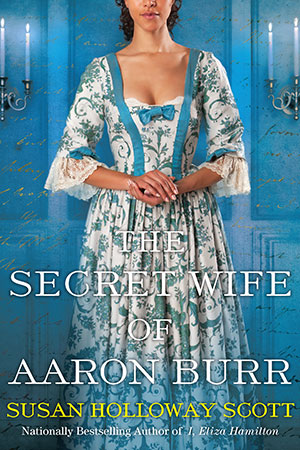
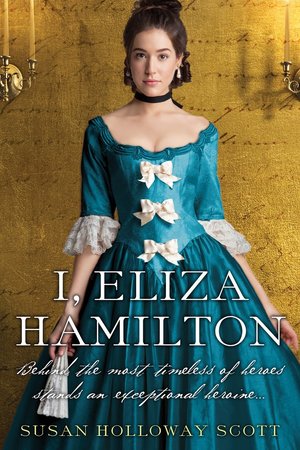
Read more about Elizabeth Schuyler Hamilton in my latest historical novel, I, Eliza Hamilton.

Top: "Elizabeth Schuyler Hamilton" by Ralph Earl, 1787, Museum of the City of New York.
Bottom: A museum educator dressed as Eliza Hamilton. Photograph by Kevin Rossi, Museum of the American Revolution.

Saturday, December 1, 2018

Breakfast Links: Week of November 26, 2018

Saturday, December 1, 2018
Breakfast Links are served! Our weekly round-up of favorite links to other web sites, articles, blogs, and images via Twitter.
Guide dogs in medieval art and writing.
• The exceptional wedding shoes of Mary Wise Farley, 1764.
• The tangled history of weaving with spider-silk.
• Forget the movies: the original ghostbuster was 19thc scholar Eleanor Sidgewick.
• Wonderful personal memories of growing up in Jewish American Detroit: the fiddle and the city.
• Yes, they did it: bust enhancement in 19thc women's dresses.
• A breathtaking reconstruction 1,300-year-old Anglo-Saxon helmet from the Staffordshire Hoard.
• Self-taught poet Hester Pulter wondered in the 17thc "Why must I forever be confined?" - now her poems are online for all to see.
• A striking 1937 gold lame wedding outfit designed and stitched by the bride herself.
Tanuki, the shape-shifting raccoon-dog: mischief, magic, and change in the Japanese countryside.
• A visit to the house of 18thc artist William Hogarth.
• The Statue of Liberty's original torch gets a new home.
• "Battalion of Life": American women's hospitals and the First World War.
• Contested rites: the fascinating roots of America's Thanksgiving holiday.
• Protecting children in traffic: a brief history of crossing guards.
• You may be cool, but you'll never be Cordell Jackson "the rockin' granny" cool.
Hungry for more? Follow us on Twitter @2nerdyhistgirls for fresh updates daily.
Above: At Breakfast by Laurits Andersen Ring. Private collection.

Wednesday, November 28, 2018

A Sparkling Length of 18thc Gold Lace from the Massachusetts Historical Society

Wednesday, November 28, 2018
Susan reporting,

Earlier this month I visited the latest exhibition at one of my favorite places for research and inspiration, the Massachusetts Historical Society in Boston, MA. Called Fashioning the New England Family, it's a truly breathtaking exhibition, featuring clothing, accessories, textiles, and embroidery worn and made by New Englanders.

The majority of the pieces are drawn from the MHS collections, and many have never before or only rarely been seen by the public. There's so much here: Abigail Adams's copper-colored silk gown (on loan from the Adams Historical Park); Thomas Hancock's walking stick crowned by a clenched ivory fist; Governor John Leverett's 17thc buff coat worn to fight under Oliver Cromwell in the English Civil War; Rachael Hartwell's light-as-air 1890s wedding dress. The history of the wearers is woven into each piece, and the presentation is thoughtful and beautifully displayed. The exhibition is free to the public, and runs through April 6, 2019. See here for more information.

I'll be featuring highlights from the exhibition in upcoming blog posts, and I'm starting with one of the smaller items. It's also among the most stunning. Some time during the mid-18thc, this length (unfolded, it measures 283 cm x 5 cm) of gold wire bobbin lace was made in Europe. Whether bought by an individual there or imported to the American colonies to be sold in a shop here, the lace was purchased and carefully wrapped in blue paper with the price written in iron gall ink. For whatever reason, the lace was never used, but instead put away in its original paper wrapping.

Metallic lace was a costly and luxurious trim, designed to sparkle in 18thc candlelit rooms. It could be used to adorn a woman's gown or a man's waistcoat, or even the cap of a special baby. (I immediately thought of the similar gold bobbin lace that was incorporated in this mat embroidered c1780 by Elizabeth Schuyler Hamilton.) Metallic lace was usually a blend of gold and silver or other metals, and over time and wear often tarnished and lost its shine.

But this particular length of lace remains as bright as new, the intricate woven gold glowing against the blue paper.  When the lace was given to the MHS, it was accompanied by a handwritten note from Susan Holmes Upham (1804-1877): "Gold lace given me with other old-fashioned things by my mother." It must indeed have been an old-fashioned curiosity by the mid-19thc. Today it's a sparkling link through the centuries to the shop of the now-forgotten milliner or mantua-maker who made the sale, tallied the price, and wrapped the lace, and the (I hope!) satisfied customer who carried the new purchase home.

Many thanks to Anne Bentley and Kimberly Alexander for giving me a special tour of the exhibition, and for including me in the planning from the earliest stages. 

The book that accompanies the exhibition - generously illustrated with many full-color photographs - is being published by the University of Virginia Press. It can be pre-ordered here.

Gold Wire Bobbin Lace, mid-18thc, European. Massachusetts Historical Society. 
Photographs courtesy of Massachusetts Historical Society.

Wednesday, November 21, 2018

Happy Thanksgiving!

Wednesday, November 21, 2018
Loretta and Susan reporting,

Turkey time! Americans will be celebrating the Thanksgiving holiday this Thursday, November 22. Since Thanksgiving also always seems to coincide with our deadlines and general manic bursts of writing, we'll be be keeping one hand on the keyboard and the other on the pumpkin pie.

We'll be taking a few days off from blogging, too, since we imagine you're all just as busy as we are. But please know that whatever the season, we're endlessly thankful for you, our readers all around the world. You're the best.

Have a wonderful - and delicious - holiday.

Above: Thanksgiving Greetings, holiday postcard, 1907, New York Public Library.

Tuesday, November 20, 2018

From the Archives: How (Not) to Dress a 17thc Puritan Maid

Tuesday, November 20, 2018
Susan reporting,

With Thanksgiving just round the corner and festive Pilgrims featured in every advertisement, let's revisit one of our most popular posts with a "Puritan maid."

Historical clothing is one of our favorite topics on this blog, and readers of both our posts and books will know how hard we try to get things *right* when in comes to what people were wearing in the past. Yet I'm also willing to concede that there can be considerable wiggle-room when it comes to theatrical costumes (no one really expects Cinderella to wear a perfect replica 18th c. gown, do they?) and other artistic expressions of past fashion.

But what happens when that artist's vision becomes such a potent image that it wipes the real thing clear away?

That was my thought while reading one of my favorite blogs, historian Donna Seger's Streets of SalemA recent post featured the 19th c. Anglo-American painter George Henry Boughton (1833-1905), and how his paintings of 17th c. New England Puritans have influenced how we today imagine those early settlers. (Read her post here.) She's right: Boughton's paintings have illustrated countless school history books, and his version of Puritan dress is still widely accepted as the real thing. In fact, when I did a search for the painting, left, the Google best guess that comes up is "Puritan fashion", followed by links to a teaching site that labels this as an example of "colonial clothing."

Except that it isn't. Like most history-painters, Boughton's intentions were the best, but what this young woman is wearing bears no more real resemblance to 17th c. clothing than the sturdy stone walls and substantial brick buildings in the background do to mid-17th c. architecture in the Massachusetts Bay Colony. Boughton painted his Puritan maiden in 1875, and to me her expression and posture seem more akin to a fashionable lady of that era; compare her with the lady in James Tissot's Portrait, also painted in 1875.

But it's the costume that Boughton contrived for his model that fascinates me the most. I'm guessing that, like many artists, he had a collection of antique and fancy-dress clothing in his studio, and he assembled an outfit from bits and pieces that looked right to him. To be fair to Boughton, he was trying to create an artistic mood, a somber, thoughtful reverie set in the past, rather than a 17th c. fashion plate. In 1875, people regarded historical clothing as old clothes to be worn to masquerades (no one loved fancy-dress more than the Victorians), and the academic study of dress and fashion was in its infancy.

Still, I'd like to offer a challenge to you. Among our readers, there are many art historians, re-enactors, costume historians, historic seamstresses and tailors, and others of you who know your historical fashion. How many different elements and eras can you see represented in this young woman's costume?

Above: A Puritan Maiden, by George Henry Boughton, 1875, Munson-Williams-Proctor Institute.

Saturday, November 17, 2018

Breakfast Links: Week of November 12, 2018

Saturday, November 17, 2018
Breakfast Links are served! Our weekly round-up of favorite links to other web sites, articles, blogs, and images via Twitter.
Lost identity of 150-year-old body discovered in New York City discovered.
Women at sea: Ann Johnson and Abbie Clifford.
• "The joy of my life": seeing-eye dogs, disabled veterans and civilians, and World War One.
• "A revolution in female manners": the political portraiture of Mary Wollstonecroft.
• "I'll glut you with gold": the strange ambivalence of the treasure map.
• Follow the thread for all the amazing images: the American Revolution as imagined in 1861 by a Japanese artist and author who had never left Japan.
Ada Lovelace and her mother Annabella Byron: the Countess of Computing and the Princess of Parallelograms.
• A toy monkey that escaped Nazi Germany and reunited a family.
Anna Morandi, the 18thc Italian anatomist and sculptor who brought dead bodies to light.
Pyrotechnia: an Elizabethan fireworks guide includes how to make a firework dragon.
• The last velvet merchant in Venice.
• Archaeologists and medical historians discover how castration affected the skeleton of famed 18thc opera singer Farinelli.
• An up-market new suburb in late 17thc London: the development of St. James's.
Child-stealing in Regency England.
• Nineteenth century Bostonian Harriot Kezia Hunt, an early practitioner of holistic medicine and staunch civil rights reformer.
• Don't try these at home: eight dishes made by notorious poisoners.
• Creeping (or creepy?) baby doll patent model, 1871.
• A c1870 silk dress with an ingenious built-in method for lifting the hem away from a dirty street (be sure to click on "additional images.")
• The Tenement Museum in NYC maps a century of deadly diseases and their human stories.
Hungry for more? Follow us on Twitter @2nerdyhistgirls for fresh updates daily.
Above: At Breakfast by Laurits Andersen Ring. Private collection.

Thursday, November 15, 2018

Friday Video: Pearls & Diamonds Worn by Queen Marie Antoinette

Thursday, November 15, 2018

Susan reporting,

Diamonds may be forever, but the jewelry that enhances them seldom is. Precious stones can be recut and reset, and precious metals reformed into new settings and pieces. Royal jewels are among the most transitory of all, especially those belonging to a doomed royal family in the midst of a revolution.

Queen Marie Antoinette of France was famous for her jewels, and it can be argued that her love for diamonds helped lead to her tragic downfall. This week, a few of her pieces (along with other jewels belonging to the Bourbon Parma family) came up for auction through Sotheby's. As can be imagined, the interest in jewels with such a history was considerable, and this video features the rarest of the pieces in the auction, and beautiful things they are, too.

Pre-auction sales estimates often tend to be low, but I imagine even Sotheby's was stunned by the final sales figures. The small enamel and seed-pearl pocket watch engraved with the queen's monogram and featured in the video was estimated to sell for around $8,000-9,000; it sold for $248,203. The triple-strand pearl necklace with the diamond clasp had an estimate of around $198,000-297,000; it sold for $2,278,499.

But the real star was the large pearl pendant on a diamond bow, right. The pre-sale estimate was around $1,000,000-2,000,000. The final price? A staggering $36,165,090.

See here for photos and a listing of all the pieces in the auction.

If you receive this post via email, you may see a blank space or black box where the video should be. Please click here to view the video.

Friday, November 9, 2018

Friday Video: Getting Dressed in 1816

Friday, November 9, 2018

Susan reporting,

Another wonderful video from our friends at CrowsEyeProductions - and this one also tells the story of how author Mary Shelley came to write her legendary novel Frankenstein. Many people believe that women's clothing of the early 19thc was breezy and uncomplicated. In comparison to the more structured clothing of the 18thc, perhaps it was; but as this video showed, there were still a good many layers involved, and a lady's maid continued to be useful.

Many thanks to Pauline Loven for sharing the latest in the "Getting Dressed" series with us.

If you receive this post via email, you may be seeing a black box or empty space where the video should be. Please click here to see the video.

Tuesday, November 6, 2018

Election Day

Tuesday, November 6, 2018
No blog post today, except this one-word message for our American readers.

You know what to do, right?

Vote, published by the Milwaukee County League of Women Voters, early 20thc, Collection of the Wisconsin Historical Society.

Saturday, November 3, 2018

Breakfast Links: Week of October 29, 2018

Saturday, November 3, 2018
Breakfast Links are served! Our weekly round-up of favorite links to other web sites, articles, blogs, and images via Twitter.
• Does discovery of a red velvet bag reinforce the legend that Sir Walter Raleigh's widow Elizabeth kept his severed head with her after his execution?
• R is for raisins, the unexpected super-food found in many early modern medicines.
• Norah Smyth, suffragette photographer.
• Image: Cat passages in the doors at Thomas Jefferson's 18thc Monticello.
• The 19thc angel guides of death.
• Stylish (and prize-winning) 1959 dress, made from a feedsack.
• President George Washington's letter to the Hebrew congregation in Newport, RI, 1790.
• ImageDubious tips on how to get a husband from an 1950s women's magazine.
• "Knackers pork": the grim reality of London slaughterhouses during the Regency.
 Elizabeth Thorn, the angel of the Battle of Gettysburg.
• Wheat the old way: 1940s video of Pennsylvania Dutch family harvesting wheat by hand, without modern machinery.
• From an 1930s trousseau: beautifully embroidered silk slip and tap pants.
• Image: 1850s child's leather boot decorated with a black cat.
• A Mandarin duck mysteriously appears on a pond in New York's Central Park.
• John Rogers and "The Legend of Sleepy Hollow."
• The Kit-Kat Club, an 18thc literary, political, and social club that became a stronghold of the Whig party.
• Workers in a Goodwill store in New Jersey discover an important, original 1774 Philadelphia "rebel" newspaper.
• Fifteen important women in history that you may not have heard of.
Hungry for more? Follow us on Twitter @2nerdyhistgirls for fresh updates daily.
Above: At Breakfast by Laurits Andersen Ring. Private collection.
Please note: I'll be traveling this week, so alas, no Breakfast Links next Sunday....

Thursday, November 1, 2018

Rare Survivors in New York City: Sylvan Terrace's Cobblestones & Row Houses, c1880

Thursday, November 1, 2018

Susan reporting,

When most of us think of Manhattan, we picture towering skyscrapers, sleek walls of glass and stone, midtown streets crowded with cabs, cars, and bustling pedestrians. Small 19thc wooden row houses and a quiet cobble street: not so much.

Yet the street shown here is indeed in Manhattan, in Washington Heights near 160th Street. I discovered it by accident, on my way to visit the 18thc Morris-Jumel Mansion (more about that in a later post.) No matter where you live, the scene may look familiar, because it has appeared as a location in numerous period films.

The street is called Sylvan Terrace. In the 1880s, the city's growth was creeping uptown, and the open fields and gardens that had so long insulated the Morris-Jumel Mansion were finally being divided into streets and house-plots. Developer James E. Ray commissioned twenty identical row houses, built on what had once been the Mansion's carriage drive. Because the neighborhood was so far uptown from what was considered the "city," the houses were exempt from fire codes that stipulated brick or stone construction, and could instead be made from less expensive wood over high brick basements.

The new street was given the pastoral name of Sylvan Terrace, another indication of how far it still was from downtown. The houses were modest, and the residents were middle-class, tradesmen and small merchants. The neighborhood continued to grow around them, larger and more lavish brownstone townhouses followed by larger-still apartment buildings. In a city where buildings are routinely knocked down within a generation to build something new,  all twenty of the little frame houses on Sylvan Terrace miraculously survived.

But time did bring changes. The original cobblestones were paved over with asphalt, and the houses themselves gradually lost most of their wood trim. Some were fronted with stucco facades, others sheathed in aluminum siding or false brick. The basic integrity of the street remained, however, and in 1970, the city's Landmarks Preservation Commission created the Jumel Terrace Historic District.

In 1981, Federal funds restored the facades to approximate their original unified appearance; the backs of the houses still reflect 20thc remodeling. The asphalt paving was removed from the cobblestone street. Reaction to the restoration seems to have been mixed at the time. Residents complained that the work had been shoddy, and a few rebellious owners began repainting the new facades. In an 1989 article about the restoration, The New York Times deplored its "deadened homogeneity."

Visiting today, it appears that the disgruntlement of the 1980s has been forgotten, or at least put aside. The houses appear beautifully maintained, and unified in their color schemes - which I personally found more harmonious than homogeneous. Perhaps it's not so much a matter of taste, but economics, that has brought peace to Sylvan Terrace. The houses seldom come on the market, but when they do, their charm and history come at a price: $1,500,000 and up.

Above: Photograph by Susan Holloway Scott.
Lower right: Photograph via Curbed NY.

Monday, October 29, 2018

Embroidery as the Thread of History

Monday, October 29, 2018
Susan reporting,

In the modern era, examples of amateur needlework created by women and girls of the past have often been regarded as sweetly decorative, and no more. The notion of dainty feminine hands bent over a sampler is a romantic one that's hard to shake: tiny precise stitches simultaneously represented not only industry, but also the luxurious spare time to sit and embroider with costly materials. While there is certainly an element of truth to this, the admiration can also be tinged with condescension. Boys went out into the world and did important things. Girls sat sequestered indoors and stitched pretty pictures.

Lately, however, material culture scholars have begun to study samplers and other embroidery from a different perspective. A new exhibition at Winterthur Museum called Embroidery: The Thread of History (now through January 6, 2019) considers these embroidered pieces as historical documents that described not only the workers themselves, but their families, friends, and the world in which they lived. As the catalogue notes, "Women are often poorly represented in traditional archival sources, but their needlework can provide crucial evidence of lives that would otherwise remain unknown."

Eighteenth and early nineteenth century samplers that listed the maker's hometown and her birth date as well as the dates for other family members were regarded as important family documents. They held the same importance and legitimacy as the handwritten pages in the front of family Bibles, and in an era when many families were moving to new regions, a sampler could be more lasting and more portable than a Bible page, too. Samplers noting marriages and births were even accepted as evidence in the military pension applications presented by widows of Revolutionary War veterans.

Through their needlework, women and girls could evoke a familiar place or culture left behind through emigration, or display civic pride by showing a new local town building or church. They could document the family's trade or wealth, documenting ships, farmlands, and homes. They could memorialize and honor the dead, whether a family member or a national figure like George Washington.

Needlework could also represent a much larger history, as the exhibition notes for the family sampler shown above - worked in silk on linen by Sarah Ann Major Harris as a schoolgirl c1822-1828 - explain:

"This sampler documents an extraordinary family and foreshadows the legal fight for equal rights for African Americans. Seeking to further education in order to become a teacher, Sarah Ann Major Harris (1812-1878) , asked Prudence Crandall if she could become a day student at her school in Canterbury, Connecticut, in 1832. Crandall agreed and, in protest, many parents withdrew their daughters from the school. Crandall then recruited other young black female pupils, many of whom were from out of state. As a result, the state of Connecticut adopted what became known as the Black Law, which prohibited the teaching of 'Colored persons who are not inhabitants of this state.' The arguments developed by Crandall's defense attorneys were used later in the case of Dred Scott vs. Sanford (1857) and were echoed in Lincoln's Emancipation Proclamation.

"Sarah Harris continued to be active in the abolitionist movement throughout her life. She married another activist, George Fayerweather, and today their home in Kingston, Rhode Island, is listed on the National Register of Historic Places. Sarah was clearly well educated, having worked this sampler before attending Crandall's school."

Many thanks to Linda Eaton, Director of Museum Collections and Senior Curator of Textiles, Winterthur Museum, for her assistance with this post.

Above: Sampler, worked by Sarah Ann Major Harris, possibly at a school in Saybrook, CT, 1822-28. Winterthur Museum.

Saturday, October 27, 2018

Breakfast Links: Week of October 22, 2018

Saturday, October 27, 2018
Breakfast Links are served! Our weekly round-up of favorite links to other web sites, articles, blogs, and images via Twitter.
Madhouse genetics: what the archives of mental-health asylums reveal about the history of human heredity and he evolution of genetics.
• A very fancy 18thc tradecard for a less-than-fancy trade: a nightman is a disposer of human waste.
Photo sleuths: How an American Civil War soldier's photograph with distinctive markings reveals the forgotten, invaluable work of the Dead Letter Office.
• Divining Mother Shipton, the 15thc Witch of York: propaganda and prophecy.
Image: The wig of Princess Nany, with locks set with beeswax and a wreathe of lotus leaves, c1000BC.
• Frivolous spending, private parties, and grumpy governesses: the secret lives of the servants at Chatsworth, the country seat of the Dukes of Devonshire.
• The mighty effects of spiritous liquor displayed; or, 18thc cider was a temperance drink.
Image: Dandy! Painter George Harvey looking dashing in his patterned dressing gown over waistcoat and trousers, c1840s, plus a similar surviving dressing gown.
• Beautiful and haunting photographs: tales from the valley that time forgot.
• The great big pumpkin fight: a late 19thc symbol of the growing divide between rural and urban American life.
Victorian mourning jewels and how they were worn.
• Too many apples? Follow this 18thc recipe to make a marmalet of pippins.
Image: Two child-sized armchairs with petit-point covers worked by Alice B. Tolkas from designs by Pablo Picasso.
• Bright 19thc embroidered braces: worked by wives, daughters, and sweethearts to help keep men's trousers in place.
• Where to find remnants of the glorious old Penn Station in New York City.
• An A-Z of Victorian novel deaths.
• Historic hauntings from Hampton Court palace.
• Saved by a giant turtle? A roadside marker program in the state of New York embraces the grey area between official history and local lore.
Hungry for more? Follow us on Twitter @2nerdyhistgirls for fresh updates daily.
Above: At Breakfast by Laurits Andersen Ring. Private collection.

Friday, October 26, 2018

Friday Video: Dressing the Women's Land Army During World War II

Friday, October 26, 2018

Susan reporting,

Due to some technical difficulties - looking at you, Comcast - our Friday Video is appearing for Saturday instead this week.

Here's another short video from our friends at CrowsEye Productions. Active during both the First and Second World Wars, the Women's Land Army was a British civilian organization created to fill agriculture jobs with women workers and therefore free more men for military service. While this video does show the kind of uniforms worn by the women in the 1940s, it also gives a glimpse of their lives as country laborers - a life that was likely new to many of the women who were from cities. Don't miss the hand-knitted sweaters and socks, plus some wonderful vintage tractors.

Many thanks to costumer, historian, and producer Pauline Loven for continuing the share these videos with us. From our stats, it's clear you enjoy them as much as we do!

If you received this video via email, you may be seeing an empty space or black box where the video should be. Click here to view the video.
 
Two Nerdy History Girls. Design by Pocket