Showing posts with label books. Show all posts

Tuesday, December 11, 2018

A Few of Susan's Favorite History Books from 2018

Tuesday, December 11, 2018
Susan reporting,

Earlier Loretta shared a few of her favorite nerdy-history books, and now it's my turn. Instead of research books, I'm going to recommend a few history-related books that I've read in the last year or so - perfect holiday gifts for all your fellow nerdy-history friends and family - or maybe just yourself.

Unintentional bonus: they're all written by women.

Treasures Afoot: Shoe Stories from the Georgian Era by Kimberly Alexander. Beautiful historical shoes captured in beautiful photographs would be reason enough to make this a must-buy for shoe-lovers. But Treasures Afoot also traces the often-fascinating stories behind shoes that were worn for special occasions like weddings or balls or by special people, and places them in a context of a changing culture of consumers, industrialization, and fashion.

Portrait of a Woman in Silk: Hidden Histories of the British Atlantic World by Zara Anishanslin. Beginning with a portrait of a woman in a silk dress, this book rapidly expands into the story of the portrait's painter, the sitter and her family, the weavers of the silk, and the woman who designed the pattern: complicated and fascinating relationships between consumers and suppliers, art and trade, that are as intricately woven together as the silk itself.

Patterns of Fashion 5: The Content, Cut, Construction & Context of Bodies, Stays, Hoops & Rumps c1595-1795 by Janet Arnold and Jenny Tiramani. All fans of historic dress rejoiced when this was finally released, and it's worth the wait. The fifth volume in Janet Arnold's legendary series of fashion history books, this book features photographs as well as patterns for recreating many of the pieces shown. Buying this book is a bit like getting Hamilton tickets, however. It's only available through the School of Historic Dress website, and because they're a small organization, only a certain number of books are available for order each day. Persevere: it's worth it.

Adélaïde Labille-Guiard: Artist in the Age of Revolution by Laura Auricchio. Adélaïde Labille-Guiard (1749-1803) was one of the few women artists granted membership in the French Royal Academy of Painting and Sculpture, and the examples of her exquisite portraits in this book show why. But she was also important because she didn't flee France during the Revolution, but remained to help rebuild and reinvent the county and the role of women artists and art. A fascinating woman!

American Eden: David Hosak, Botany, and Medicine in the Garden of the Early Republic by Victoria Johnson. Unjustly overlooked now, Dr. David Hosak (1769-1835) was perhaps the most important physician of the early American republic, pioneering smallpox vaccinations, cancer treatments, and pharmacology. and creating an idyllic educational garden for the medicinal study of plants where Rockefeller Center now stands in New York. He was also excellent company, and friend to many of the most notable people of his time. Interesting fact: Dr. Hosack was the family physician to both Alexander Hamilton and Aaron Burr, and the attending doctor at their fateful duel.

Never Caught: The Washington's Relentless Pursuit of Their Runaway Slave, Ona Judge by Erica Dunbar. Enslaved by the most powerful man in the young United States, Ona Judge (c1773-1848) took the courageous step to run away from the Philadelphia household of George and Martha Washington. Unlike many in her situation, she succeeded in her self-emancipation - but her freedom was tested again and again as the Washingtons continued to pursue her until their deaths. A powerful, disturbing, and yet ultimately inspiring story of a once-forgotten woman.

Upper left: "A lady coming from the circulating library" by John Raphael Smith, c1781, British Museum.

A Few of Loretta's Favorite Nerdy History Books

Globe-Wernicke, ad in American Homes & Gardens c 1905

Loretta reports:

Readers often ask which books we recommend on this, that, or the other subject. For this holiday season, it seemed like a good idea to mention some favorites. They might become gifts for the nerdy history person in your life or for yourself. Many are still in print and easily available. Some are trickier to find. While I could recommend hundreds, I winnowed it down to the following, which I often turn to for information and inspiration.

Adams, Samuel & Sarah. The Complete Servant (1825). You can read this online, or can buy your own copy. Details about not only the servant hierarchy, servants’ duties, but also the economics of maintaining household staff.

Black, A&C (publishers) Titles and Forms of Address: A Guide to Correct Use. This or Debrett’s Correct Form will help readers understand titles and forms of address they encounter in books as well as prevent writers’ committing social atrocities in their stories.

Bradfield, Nancy. Costume in Detail: Women's Dress 1730-1930. A detailed look, inside and out, of the way clothes were constructed. Extremely helpful for dressing and undressing our heroines.

Cunnington, C. Willitt. English Women’s Clothing in the Nineteenth Century and Cunnington, C. Willett and Cunnington, Phillis. The History of Underclothes (1992).  The Cunnington books, written in the early part of the 20th century, feature some outdated viewpoints. However, they still offer a wealth of examples as well as amusing and enlightening quotations from primary sources.

Gill, Gillian. We Two: Victoria and Albert: Rulers, Partners, Rivals. My favorite biography to date, and I’ve read quite a few. It reads like fiction. I originally hesitated to buy it because my sense was that Victoria lost the most fun and interesting part of herself when she wed, and that just depressed the daylights out of me. But this book offers a rather different perspective, bringing two strong personalities into sharp focus, and the compelling story starts well before she was born, with an almost operatic account of the events leading to her becoming Queen.

Grimble, Frances. The Lady's Stratagem: A Repository of 1820s Directions for the Toilet, Mantua-Making, Stay-Making, Millinery & Etiquette. Exactly as described in subtitle, it’s a marvelous compilation of information from various sources.

Inglis, John R. and Sanders, Jill. Panorama of the Thames: A Riverside View of Georgian London. A beautiful book and a labor of love that takes us on a voyage up and down the Thames during the Regency.

Rylance, Ralph. The Epicure’s Almanack. A moment in the Regency captured, as the author takes us on a detailed tour of all London’s eating establishments, and tells us what foods are in season when.
Félix Vallotton, La bibliothèque 1915 

Salisbury, Deb. Elephant’s Breath & London Smoke. A sort of OED of historical color, including dates for color names, and descriptions, it also offers advice on what colors for what complexions and occasions, among other fascinating details.

A Member of the Aristocracy. Manners and Rules of Good Society. A helpful etiquette book, as long as we remember it’s late Victorian to Edwardian (depending on the edition), when rules were more complicated and rigid than in earlier generations.

For more books we've referred to in our work and blogging, please click on the NHG library tag.

Images: Globe-Wernicke, advertisement in American Homes & Gardens c 1905;  Félix Vallotton, 1915  La bibliothèque.

Clicking on the image will enlarge it.  Clicking on a caption link will take you to the source, where you can learn more and enlarge images as needed. And, just so you know, if you order a book through one of my posts, I might get a small share of the sale.

Tuesday, November 27, 2018

Victorian Fly-Cages

Tuesday, November 27, 2018

Napomyza lateralis
Loretta reports:

From the Annals of Obscurity:
Mr. Bumble sat in the workhouse parlour, with his eyes moodily fixed on the cheerless grate, whence, as it was summer time, no brighter gleam proceeded, than the reflection of certain sickly rays of the sun, which were sent back from its cold and shining surface. A paper fly-cage dangled from the ceiling, to which he occasionally raised his eyes in gloomy thought; and, as the heedless insects hovered round the gaudy network, Mr. Bumble would heave a deep sigh, while a more gloomy shadow overspread his countenance. Mr. Bumble was meditating; it might be that the insects brought to mind, some painful passage in his own past life.—Charles Dickens, Oliver Twist
Behold me gazing ceilingward. Fly-cage? Paper fly-cage? Apparently, I’d happened upon one of those numerous 19th century articles, like ticket porters, that were once a necessity and part of everyday life, and now extinct. The fly-cage wasn't an easy thing to track down, and I'm grateful to Lonely Planet for guiding me.

According to the Dickensian these fly-cages "were usually made of coloured perforated paper folded into globular or bell-shaped forms suspended from the ceiling. They were not intended for "cages" but as places in which flies could settle so that their buzzing should not be an annoyance."—the Dickensian Vols 46-47; Dickens Fellowship, 1949
Apparently, however, it wasn’t just to stop the annoying buzzing, but the annoying fly specks on ceilings and walls.
Point Lace Fly-Cage
“Every cottager who has hung the gaudy-coloured paper “fly-cages” in his room, to prevent his clean whitewashed roof and walls from being dirtied by common house-flies, has practically availed himself of the attraction which bright colours have for even these non-flower-loving insects.”—John Ellor Taylor, Flowers: Their Origin, Shapes, Perfumes, and Colours 1878
Though I've so far found no lovely colored illustrations of the paper fly-cages, Cassell's Household Guide, Volume 2 1869 explains how to make one.

If you’d like something more elaborate (though some of us would wonder why), you can also crochet one. Yes, you read correctly. You can crochet your own fly-cage. Mrs Jane Weaver provides instructions in the Peterson Magazine of 1858.
Pendant Fly-Cage

Links to better illustrations of the paper fly-cage will be warmly welcomed.

Images: Napomyza lateralis; Point lace fly cage, from Cassell's household guide, Volume 2 1869; Pendant fly-cage from the Peterson Magazine, Volumes 33-34


Clicking on the image will enlarge it. Clicking on a caption link will take you to the source, where you can learn more and enlarge images as needed.

Tuesday, November 13, 2018

From the Archives: Harriette Wilson on Virtue

Tuesday, November 13, 2018
Loretta reports:

The Regency era courtesan Harriette Wilson belonged to the sorority called Girls Just Want To Have Fun.  Here’s her take on virtue:

~~~
There certainly was much aggravation of sin, in my projected criminal intercourse with the Marquis of Worcester.  Many women, very hard pressed par la belle nature, intrigue because they see no prospect nor hopes of getting husbands; but I, who might, as everybody told me, and were incessantly reminding me, have, at this period, smuggled myself into the Beaufort family, by merely declaring to Lord Worcester, with my finger pointed towards the North—that way leads to Harriette Wilson’s bedchamber; yet so perverse was my conscience, so hardened by what Fred Bentinck calls, my perseverance in loose morality, that I scorned the idea of taking such an advantage of the passion I had inspired, in what I believed to be a generous breast, as might, hereafter, cause unhappiness to himself, while it would embitter the peace of his parents.

Seriously I have but a very confused idea of what virtue really is, or what it would be at.  For my part, all the virtue I ever practised, or desire to learn, was such as my heart and conscience dictated.

Now the English Protestant ladies’ virtue is chastity!  There are but two classes of women among them.  She is a bad woman the moment she has committed fornication; be she generous, charitable, just , clever, domestic, affectionate, and ever ready to sacrifice her own good to serve and benefit those she loves, still her rank in society is with the lowest hired prostitute.  Each is indiscriminately avoided, and each is denominated the same—bad woman, while all are virtuous who are chaste.

…The soldier’s virtue lies in murdering as many fellow creatures as possible, at the command of any man, virtuous or vicious, who may happen to be his chief, no matter why or wherefore.

The French ladies’ virtue is, generally speaking, all comprised and summed up in one single word and article—bienséance!*

*propriety
~~~
Excerpt from The Memoirs Of Harriette Wilson, which were first published in 1825.
You can read the first two volumes from the 1909 edition online here.    And for further insight into this fascinating woman, you might want to look into The Courtesan’s Revenge: The Life of Harriette Wilson, the Woman Who Blackmailed the King.

Friday, November 9, 2018

Friday Video: Getting Dressed in 1816

Friday, November 9, 2018

Susan reporting,

Another wonderful video from our friends at CrowsEyeProductions - and this one also tells the story of how author Mary Shelley came to write her legendary novel Frankenstein. Many people believe that women's clothing of the early 19thc was breezy and uncomplicated. In comparison to the more structured clothing of the 18thc, perhaps it was; but as this video showed, there were still a good many layers involved, and a lady's maid continued to be useful.

Many thanks to Pauline Loven for sharing the latest in the "Getting Dressed" series with us.

If you receive this post via email, you may be seeing a black box or empty space where the video should be. Please click here to see the video.

Thursday, October 25, 2018

Frankenstein and the Critics

Thursday, October 25, 2018
Frankenstein, annotated 2017
Loretta reports:

Mary Shelley’s reviewers had extremely different reactions to Frankenstein.

Following a plot summary, John Croker has this to say:
“Our readers will guess from this summary, what a tissue of horrible and disgusting absurdity this work presents ... The dreams of insanity are embodied in the strong and striking language of the insane, and the author, notwithstanding the rationality of his preface, often leaves us in doubt whether he is not as mad as his hero." 
Following samples of the prose style:
“... we take the liberty of assuring [the author] ... that the style which he has adopted in the present publication merely tends to defeat his own purpose, if he really had any other object in view than that of leaving the wearied reader, after a struggle between laughter and loathing, in doubt whether the head or the heart of the author be the most diseased."
Quarterly Review 18 (January [delayed until 12 June] 1818): 379-385. From the Mary Shelley Chronology and Resource Site, Scholarly Resources, Romantic Circles.

Walter Scott, however, is thrilled:
“So concludes this extraordinary tale, in which the author seems to us to disclose uncommon powers of poetic imagination. The feeling with which we perused the unexpected and fearful, yet, allowing the possibility of the event, very natural conclusion of Frankenstein's experiment, shook a little even our firm nerves ...

It is no slight merit in our eyes, that the tale, though wild in incident, is written in plain and forcible English, without exhibiting that mixture of hyperbolical Germanisms with which tales of wonder are usually told, as if it were necessary that the language should be as extravagant as the fiction. The ideas of the author are always clearly as well as forcibly expressed; and his descriptions of landscape have in them the choice requisites of truth, freshness, precision, and beauty ... 

Upon the whole, the work impresses us with a high idea of the author's original genius and happy power of expression ... If Gray's definition of Paradise, to lie on a couch, namely, and read new novels, come any thing near truth, no small praise is due to him, who, like the author of Frankenstein, has enlarged the sphere of that fascinating enjoyment."
Start of review in La Belle Assemblée
Blackwood’s Edinburgh Magazine 2 (March 1818)
His whole review is well worth reading, as are others. You can read them here at the Romantic Circles website.

If you are in New York between now and the last week of January, you might want to stop by the Morgan Library for the exhibition, “It’s Alive! Frankenstein at 200.”

Images: Cover of 2017 annotated edition of Frankenstein; Beginning of La Belle Assemblée review of Frankenstein, Vol. 17, March 1818

Clicking on the image will enlarge it.  Clicking on a caption link will take you to the source, where you can learn more and enlarge images as needed. And just so you know, if you order a book through one of my posts, I might get a small share of the sale.

Monday, October 22, 2018

The Lunatic Asylum Nightmare

Monday, October 22, 2018
Goya, Courtyard with Lunatics
Loretta reports:

The nightmare theme of a sane person being locked up in a lunatic asylum appears in fiction again and again. This is because it touched a chord. For all too many, especially women, this was a grim reality.

My Experiences in a Lunatic Asylum, which I came upon via the Public Domain Review, describes in disturbing detail a man’s experience in the Victorian era. For a woman’s point of view, you might want to look at Nellie Bly’s Ten Days in a Mad-House.

In the fictional world, the theme is prominent in Wilkie Collins’s The Woman in White.
"I suppose that we most of us...quietly comforted ourselves with the reflection that 'in the nineteenth century' (an expression which is used as a sort of talisman, apparently, like the 'Briton' of Palmerston's day) such things are impossible.  It requires a personal experience of their amenities, such as fell to my lot, seriously to believe that the adventures of a novel may be transferred to the pages of an 'article," and be as strange--and true. Villainous conspiracies, for personal motive, to set the lunacy law in motion, are rare enough, I do not doubt. But the law favours them. What is not rare, I doubt even less, is the imprisonment in these fearful places of people who are perfectly sane, but suffering from some temporary disorder of the brain, the most delicate and intricate part of all the mechanism, and the least understood; and if asylums are a sad necessity for the really mad,—and even that I cannot help doubting; for from what I have seen I believe that they require a much more loving and more direction personal supervision than they can get, poor people,--for the nervous sufferers who are not mad they are terrible."—My experiences in a Lunatic Asylum, by a Sane Patient (1879)
Experiences in a Lunatic Asylum


Clicking on the image will enlarge it.  Clicking on a caption link will take you to the source, where you can learn more and enlarge images as needed. And, just so you know, if you order a book through one of my posts, I might get a small share of the sale.

Wednesday, September 19, 2018

"Moral Poison": The Evils of Reading Novels, 1864

Wednesday, September 19, 2018
Susan reporting,

Loretta and I have written so many posts for this blog over the years - nearly a decade's worth! - that we've forgotten a good many of them. Fortunately, our readers haven't. This one surfaced yesterday on Twitter (thank you, Lucy Paquette), and I thought it deserved another appearance here as I wallow through deadline-itis.

In an earlier post, I shared an 18thc warning against women reading romances. By 1860, those who worried about everyone else's reading habits had expanded their concerns, including all novels read not only by women, but by men as well. Apparently novels were dangerous.

The warnings below come from a religious tract published in New York in 1864. A Pastor's Jottings; or, Striking Scenes during a Ministry of Thirty-Five Years was printed anonymously because, as the prefatory note explains, the author "could thus write with more freedom." That same note assures us that "the statements of this volume are all literally true."

Among the many things (this book is nearly 350 pages long) that distress this unknown pastor, novels - that "moral poison" - are right there at the top of the list: "The minds of novel readers are intoxicated, their rest is broken, their health shattered, and their prospect of usefulness blighted."

But he doesn't want us simply to take his word for it. Apparently even novels by Charles Dickens are suspect, and he quotes the famous educator Dr. Thomas Arnold of Rugby School fame to prove it:

Childishness in boys even of good ability seems to be a growing fault; and I do not know what to ascribe it, except to the great number of exciting books of amusement, like Pickwick, Nickleby, Bentley's Magazine, etc...that leave [a boy] totally palled, not only for his regular work, but for literature of all sorts.

Nor are women exempt from the terrible influences of novel-reading. In fact (remember, this is all LITERALLY TRUE), according to the pastor, women suffer even more:

Listen to the evidence given by a physician in Massachusetts: 'I have seen a young lady with her table loaded with volumes of fictitious trash, poring day after day and night after night over highly wrought scenes and skillfully portrayed pictures of romance, until her cheeks grew pale, her eyes became wild and restless, and her mind wandered and was lost – the light of intelligence passed behind a cloud, and her soul was forever benighted. She was insane, incurably insane from reading novels.'

But insanity is only the beginning:

Not very long since, a double suicide was committed...by a young married couple from Ohio, who were clearly proved to be led to ruin and death by these most pernicious books....Police officers too in London and some of our own large cities, have given mournful evidence of the results of some of these novels when dramatized and performed on the stage, as leading to burglaries and murder.

Suicide, madness, burglaries, and murder! As an unrepentant novelist, I clearly have much to answer for. While for obvious reasons, I don't want you to see the error of your ways, but if you'd like to read more of the Unnamed Pastor's edifying work, here's the link to his book, available to read for free via Google Books.

Thanks to Clive Thompson, who shared quotes from A Pastor's Jottings on Twitter.

Above: The Pink Domino; print made by William Henry Mote after Frank Stone, c1833-1835. The British Museum.

Wednesday, August 8, 2018

The Lasting Legacy of Elizabeth Schuyler Hamilton

Wednesday, August 8, 2018
Susan reporting,

Legacies are notoriously fickle things.

They're difficult to create, and even harder to maintain.

Yet one New York woman's legacy still flourishes after more than two centuries. Built on kindness and a genuine concern for the welfare of others, the legacy of Elizabeth Schuyler Hamilton (1757-1854) continues today because the same challenges that faced many children in 1806 unfortunately remain a part of our society in 2017.

During her lifetime, Eliza Hamilton thought of the present, not posterity.  Born to privilege and married to Alexander Hamilton, the first Secretary of the Treasury, she still believed in helping others directly. She brought food, clothes, and comfort to refugees of the French Revolution, and to new widows after yellow fever epidemics. She took in a young motherless girl who'd no place to go, and the child became part of her own family for years. In 1797, she was one of the founders (with her friend Isabelle Graham and her daughter Joanna Graham Bethune) of the Society for the Relief of Poor Widows with Small Children.

When Alexander Hamilton died after his infamous duel with Aaron Burr in 1804, Eliza was grief-stricken, but refused to fade into genteel widowhood. Financial difficulties - Hamilton had left her saddled with many debts - forced her to seek assistance from family and friends to support herself and her children, yet still she continued to help others. Her late husband had begun life as a poor and fatherless child, and orphans were always to hold a special place in her heart - and her energies.

In 1806, Eliza, Isabella Graham, and Joanna Bethune founded the Orphan Asylum Society in the City of New York (OAS). Eliza was named second directress. The OAS began with sixteen orphans, children rescued from a harrowing future in the city's streets or almshouses.

But Eliza and her friends realized that these first orphans must be only the beginning of their mission. In the first years of the nineteenth century, New York had grown into the largest city in America with a population of over 60,000, crowded largely into the winding streets of lower Manhattan. the harbor had made the city a major port, and goods and passengers arrived from around the world.

While some New Yorkers prospered, many more fell deeper into poverty and disease, and it was often the children who suffered most. In greatest peril were children who arrived in the city as new orphans, their immigrant parents having died during the long voyage. Completely alone, these children were often swept into dangerous or abusive situations with little hope of escape.

Eliza and her friends would not abandon them. With each year, the OAS grew larger, and was able to help more children, yet the goals of the OAS never changed. Children were provided not only with food, clothing and shelter, but also education and the skills of a trade so that they cold become independent and successful adults.

In 1821, Eliza was named first directress (president), with duties that ranged from the everyday business of arranging donation for the children in her charge to overseeing the finances, leasing properties, visiting almshouses, and fundraising to keep the OAS growing. With her own sons and daughters now grown, these children became an extended family. She took pride in each of of them, and delighted in their successes, including one young man who graduated from West Point.

She continued as directress until 1848 when she finally, reluctantly, stepped down at the age of 91, yet she never lost interest in the children she had grown to love. When she died in 1854 at the remarkable age of 97 - over fifty years after her beloved Alexander - The New York Times wrote of her: "To a mind most richly cultivated, she added tenderest religious devotion and a warm sympathy for the distressed."

The OAS that Eliza Hamilton helped found continues today. Now known as Graham Windham, it has evolved into an organization that supports hundreds of at-risk children and their families in the New York area. Times have changed - the 19th century's orphans are today's youth in foster care - but the mission remains true to Eliza Hamilton's original goals: to provide each child in their care with a strong foundation for life in a safe, loving, permanent family, and the opportunity and preparation to thrive in school, in their communities, and in the world.

"We serve the children who need us most," says Jess Dannhauser, president and CEO of Graham Windham. "It's a deep personal commitment for us. We don't turn anyone away. These are hard-working, courageous kids who want to make something of themselves and are looking for ways to contribute, and we're constantly adapting to discover the best ways to serve them."

Today - August 9 - marks the 261th anniversary of Eliza Schuyler Hamilton's birthday. Although I completed writing I, Eliza Hamilton over a year ago, I've been thinking a lot about Eliza again lately, especially in a world that seems to have become increasingly selfish and uncaring, with little regard for those - especially children - in need.

In May, 2017, I visited the churchyard of Trinity Church in Wall Street, where Eliza and Alexander Hamilton are buried side by side. It's become something of a pilgrimage site for fans of Lin-Manuel Miranda's phenomenal musical, and Alexander's ornate tomb in particular is often decked with flowers and other tributes.

On this morning, Eliza's much more humble stone - where she is described only as her father's daughter and her husband's wife, as was common for 1854 - was notably bare, and I resolved to find a nearby florist. Before I did, however, I stopped inside the church itself. Near the door is a box for contributions to Trinity's neighborhood missions, and I realized then that Eliza didn't need another memorial bouquet. Her legacy instead continues in the example of her own selflessness, compassion, and generosity to others. With a whisper to the woman who'd lived long before me, I tucked the money I'd intended for flowers into the contribution box.

Thank you, Eliza, and may your legacy always endure.

Upper left: Elizabeth Schuyler Hamilton, by Ralph Earl, 1787, Museum of the City of New York.
Right: Mrs. Alexander Hamilton, by Daniel P. Huntingdon, c1845, American History Museum, Smithsonian. Gift of Graham Windham.
Lower left: Grave of Elizabeth Schuyler Hamilton. Photograph ©2017 Susan Holloway Scott. 

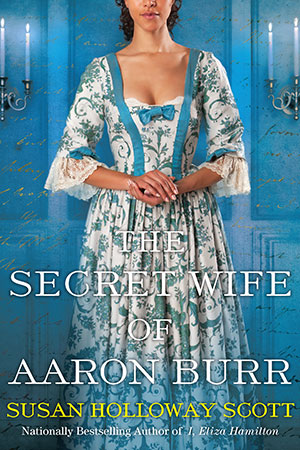
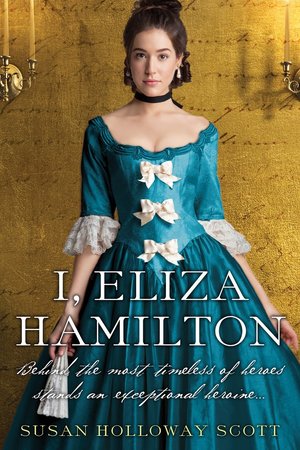
Read more about Eliza Schuyler and Alexander Hamilton in my latest historical novel, I, Eliza Hamilton, available everywhere.

Friday, July 27, 2018

Friday Video: The Odyssey by Thug Notes

Friday, July 27, 2018
Loretta reports:

Back in January, I alerted you to Emily Wilson's new translation of Homer's Odyssey, the first in English by a woman. Since then I’ve been reading it in installments, puzzling over the hero especially, and what drives him, as well as the culture in which the story lives.

This video offers some interesting insights as well as laughs. However, since it’s part of the Thug Notes series, be warned that the language is not delicate.


Video:  Homer's Odyssey - Thug Notes Summary and Analysis

Readers who receive our blog via email might see a rectangle, square, or nothing where the video ought to be. To watch the video, please click on the title to this post (which will take you to our blog) or the video title (which will take you to YouTube).
Image at top left is a still from the video.

Tuesday, June 26, 2018

Gone Typin'

Tuesday, June 26, 2018
It's summertime, the time of year when we usually pack up the blog for vacation and go fishin'.

But this year, we're spending these beautiful June days at our keyboards, typin', not fishin'. While our working conditions aren't nearly as grim as this, we do have to concentrate on our books for a bit instead of blogging.

Look for fresh posts after Independence Day!

Early 20thc photograph from The Virtual Typewriter Museum.

Sunday, June 24, 2018

Shameless Self-Promotion: A Pair of Upcoming Events Featuring I, ELIZA HAMILTON

Sunday, June 24, 2018

Susan reporting,

July seems to have become the unofficial month to honor Alexander Hamilton: statesman, soldier, hero of the American Revolution, signer of the Constitution, first Secretary of the Treasury, founder of America's financial system, the United States Mint, the Federalist Party, the Coast Guard, two banks, and a newspaper -  and he was the husband of Eliza Schuyler Hamilton, the heroine of my current historical novel, I, Eliza Hamilton. (He's also "Ten Dollar Founding Father" on the ten dollar bill, and the star of the award-winning Broadway show that bears his name; John Adams would be sick with envy.)

But until Lin-Manuel Miranda put Hamilton's life to music several years ago, what most people knew about Hamilton was that he was shot in a duel by then-Vice President Aaron Burr. (Read more about that tragic event in my blog posts here, here, and here.) The duel took place on July 11, 1804, and Hamilton died the following day. For better or worse, this is the reason for July being "Hamilton Month" - and with that in mind, I'll be participating in two events that will focus less on Alexander, and more on his wife Eliza.

On Thursday, July 12, 6:00-7:30 pm, I'll be the guest of the Friends of Independence National Historical Park in Philadelphia. I'll be speaking about Eliza and Alexander and how I came to write Eliza's story in the Benjamin Franklin Museum - only a few blocks away from where the Hamiltons lived while Alexander was serving in the new Federal government. We'll share a toast in honor of Alexander (not you, Colonel Burr), and I'll be signing copies of I, Eliza Hamilton as well. The talk will benefit the Friends of INHP. See here for more information and for tickets.

And on Saturday, July 14, 3:00-5:30 pm, I'll be part of the Schuyler Sisters Book Slam, hosted by the historic Schuyler Mansion (the beautifully restored and furnished 18thc home of the Schuyler family, and the site of Eliza's wedding to Alexander) in Albany, NY.  I'll be discussing my research about Eliza that inspired I, Eliza Hamilton. Also participating will be author and scholar Danielle Funiciello, who will share her research regarding the oldest Schuyler sister, Angelica Schuyler Church. Rounding out the program will be L.M. Elliot, author of the young adult historical novel Hamilton and Peggy!, who will discuss the third Schuyler sister, Margarita "Peggy" Schuyler Van Rensselaer. A reception and booksigning will follow. See here for more information.

Hope to see you there!

Top left: Alexander Hamilton by James Sharples, c1796, New York Historical Society.
Right: Independence Hall, Philadelphia, PA.
Lower left: Schuyler Mansion, Albany, NY.
All photos by Susan Holloway Scott.

Tuesday, June 12, 2018

From the Archives: They Do It Differently in France, Part One

Tuesday, June 12, 2018
Frances Trollope ca 1832
Loretta reports:

[Note: This post is from 2010, when I was researching my Dressmakers series. In light of recent discussions about the differences in the way married and unmarried women dressed, it seemed worth a return engagement.]

I had occasion to reopen my yellowed copy of Fanny Trollope’s  Paris and the Parisians recently, and was reminded what a delightful account she offers of Paris in 1835.  I suggest you read the entire Letter XXXV —which I have had to hack up mercilessly below.  It points out a very interesting cultural difference.

By this time, in England, arranged marriages were a thing of the past, but not in France.  This led to some interesting differences in social behavior.  In France, Fanny tells us, the unmarried girls are the last to get dancing partners.  It’s the married women—and many of them no spring chickens—to whom all the young gallants flock.  She discusses this oddity with an unnamed French woman of her acquaintance, who asks, "Will you then have the kindness to explain to me the difference in this respect between France and England ?"

Fanny: " The only difference between us which I mean to advocate is, that with us the amusement which throws young people together under circumstances the most likely, perhaps, to elicit expressions of gallantry and admiration from the men, and a gracious reception of them from the women, is considered as befitting the single rather than the married part of the community."

 " With us, indeed, it is exactly the reverse," replied she,—" at least as respects the young ladies. By addressing the idle, unmeaning gallantry inspired by the dance to a young girl, we should deem the cautious delicacy of restraint in which she is enshrined transgressed and broken in upon. A young girl should be given to her husband before her passions have been awakened or her imagination excited by the voice of gallantry.…When a girl is first married, her feelings, her thoughts, her imagination, are wholly occupied by her husband. Her mode of education has ensured this; and afterward it is at the choice of her husband whether he will secure and retain her young heart for himself. In no country have husbands so little reason to complain of their wives as in France ; for in no country does the manner in which they live with them depend so wholly on themselves.”

Marie J. Lafont-Porcher ca 1835
After politely debating which country has got it all wrong, the Unnamed Lady concludes:  “…as we go on exchanging fashions so amicably, who knows but we may live to see your young ladies shut up a little more, while their mothers and fathers look out for a suitable marriage for them, instead of inflicting the awkward task upon themselves?* And in return, perhaps, our young wives may lay aside their little coquetries, and become mères respectables somewhat earlier than they do now. But, in truth, they all come to it at last."

*Italics mine.

Images: Frances Trollope, by Auguste Hervieu circa 1832, courtesy National Portrait Gallery NPG 3906 via Wikipedia. François Kinson, Portrait of Marie J. Lafont-Porcher circa 1835, courtesy Groeningemuseum, via Wikipedia.

Tuesday, June 5, 2018

From the Archives: As Used by Jane Austen: Pins, the Regency Post-It

Tuesday, June 5, 2018


Susan reporting,

Another oldie but goodie from the archives....

I've written before about the importance of pins in everyday 18th c. life. Straight pins were widely used to fasten all kinds of clothing, from women's bodices to infant's diapers, and also used in hand sewing. Pins were considered so indispensable that when Abigail Adams wrote from colonial Massachusetts to her husband John Adams in Philadelphia in 1775, the one thing she requested was for him to "purchase me a bundle of pins and put in your trunk for me." (Read the rest of the letter here.)

Pins for clothing and sewing, yes. But I hadn't realized that pins were also an essential tool for 18th c. writers. Thanks to (or cursed by, depending on your point of view) computers, most modern writers submit manuscripts electronically. Rewrites and copy edits are all conducted now through the magic of track changes and transmissions. Gone are the days of hauling manuscript boxes to the post office, not to mention pages that bristled with pink "flags", the comments and queries pasted to the edges of pages by editors. I've gotten to the point where the only words on paper I see in the entire process are in the finished book – and the way things are going, that may soon vanish, too.

But what did writers do in the days before paper clips and Post-Its? How did an early novelist who was already struggling to make sense of a handwritten manuscript mark revisions and additions? According to the librarians of Oxford's Bodleian Library, the answer is pins – and lots of them. All those notes and insertions and extra copy were handwritten on scraps of paper and pinned in the margin with a straight pin. The pins, above, were all plucked from the library's holdings, and date from 1692 to 1853.

In 2011, the Bodleian acquired a true Jane Austen rarity: the manuscript draft of her abandoned novel, The Watsons. (See here for more about the auction and the staggering realized price, as well as a page of the manuscript itself.) In addition to the clues to cross-outs and rewrites on the draft provide, there were also a wealth of pinned-on additions. For purposes of preserving the manuscript, these pins were carefully removed with their notes, studied, catalogued, and saved – a librarian's scholarly labor of love.

But as a fellow-writer, I like to imagine Jane at work at her small writing table. I wonder: did she use the same pins she used for her clothing, or did she have another stash of pins reserved for writing? Did she keep a pin cushion on the table with a stack of scrap-paper sheets beside her inkwell, prepared and ready to make changes? Or did she tuck them into her sleeve like a hurried seamstress might, keeping them literally at hand when she needed them?

Here is the link to the original article about literary pinning by Christopher Fletcher, Keeper of Special Collections at the Bodleian Library. Thanks to Deb Barnum for first sharing this story with us. 

Above: Manuscript pins, c. 1690-1850. Bodleian Library.

Thursday, May 17, 2018

From the Archives: Jane Austen's Surprising Aunt Philadelphia

Thursday, May 17, 2018
Susan reporting,

With my manuscript deadline drawing ever-closer, here's another favorite post from the archives about a woman who could certainly inspire a book of her own.

In 18thc Britain, it wasn't only younger sons who went out to India in search of fortune and adventure. English women also made the arduous journey in the hopes of finding fortune, adventure, and, most importantly, husbands in a male-dominated land where the odds would be much in their favor.

One of these adventuresome women was Philadelphia Austen Hancock, who in her later years became a favorite aunt to novelist Jane Austen. As a child, however, Philadelphia was no one's favorite. Born in 1730, she soon lost her mother in 1733, and her father in 1737. Her stepmother had no interest in raising either Philadelphia or her younger brother and sister, and as was sadly common at the time, the three young siblings were separated and sent to live with other relatives.

While the two younger children were sent to Austen family members, Philadelphia was given to members of her mother's family, the Hampsons. The Hampsons had both money and position - Philadelphia's uncle was a baronet - but they seemed to have shared little of it with the inconvenient little girl. While Philadelphia's brother George was sent to Oxford to become a clergyman, Philadelphia was apprenticed at fifteen to a London milliner named Hester Cole. No doubt the Hampsons considered their familial obligations done.

Some modern Austen-fans choose to interpret Philadelphia's occupation as a euphemism for prostitution, jumping to the conclusion that because many milliners (and seamstresses, and mantua-makers, and parlor-maids, and just about every other trade that a young woman might attempt in 18thc. London) were so underpaid that they turned to prostitution to support themselves. The fact that Mrs. Cole's shop was in Covent Garden also makes it tempting to speculate about Philadelphia's real trade. But however disinterested the Hampsons may have been in her, it seems unlikely they'd send her to a bawdy house, nor is there any historical proof of Philadelphia earning her living in any less-than-honorable way.

Whatever the case, Philadelphia must not have found millinery to her taste, because at twenty she sailed for India, her passage paid by a relative. No one knows if she went boldly through her own choice, or was perhaps sent away by the Hampsons (another hint of scandal?) Either way, it must not have been an easy decision, and it's hard to imagine a young woman making such a desperate journey alone, and without any real prospects or friends waiting for her in a very foreign land. Without a dowry, her face really would have been her only fortune.

But Philadelphia's gamble paid off.  After a short time in India, she did marry, quite respectably, to Tysoe Saul Hancock, who was a surgeon with the East India Company. They had one daughter, Eliza. Again the centuries-old whispers appear, hinting that Eliza's real father was her wealthy godfather Warren Hastings, the future Governor General of India. Again, too, there is no real proof to substantiate the rumors, but Philadelphia had chosen her daughter's godfather - or her own lover - well: Hastings provided Eliza with a substantial legacy of £10,000.

In any event, Philadelphia and her daughter returned to London, while Hancock continued to toil in India. Eliza was raised as a lady, with a full compliment of lessons in dancing, French, and the harp, and all the advantages that Philadelphia hadn't had for herself. When Dr. Hancock died, the two women found London too expensive for the fashionable life they wished to live, and they went instead to Paris, where they were quickly swept up into the gay life of the French society in the last days before the Revolution. Wanting the security for Eliza that she couldn't provide herself, Philadelphia urged her towards a marriage with a French count, who died on the guillotine. (Eliza's second marriage, to her cousin Henry Austen, was both longer and happier.) While Philadelphia's decisions might not always seem today to have been the wisest for her or her daughter, she made them as a woman of her time, with limited options and resources.

Regardless of the shadows in her past, Phila (as she was known in the family) was welcomed at the home of her brother George, now a clergyman, and she was with George's wife when their daughter Jane was born. It's easy to imagine why Aunt Phila became Jane's favorite aunt: not only was she a trusted member of the family, but she also carried with her that hint of mystery and scandal, along with the exoticism of India and the sophistication of Paris - all in short supply in the home of a country clergyman.

When I look at the little miniature of Philadelphia shown here, I see only an elegantly attractive lady, with a fashionable hairstyle and a genteel smile. That little half-smile only makes me long to know the truth about her personal history, and to fill in all those scandalous gaps that time (and perhaps the well-meaning and more respectable George) have glossed over. Ahh, Jane, if only you'd written your aunt's story!

Top: Miniature portrait ring of Philadelphia Austen Hancock, by John Smart, c1768. Private collection. Photograph copyright Rowan & Rowan.

Friday, May 11, 2018

Please Join Me at the Gaithersburg Book Festival, Saturday, May 19

Friday, May 11, 2018
Susan reporting,

Next Saturday, May 19, 2018, I'll be appearing at the annual Gaithersburg Book Festival in Gaithersburg, MD (not far from Washington, DC and Baltimore, MD). This is a wonderful all-day festival featuring dozens of bestselling authors, signing and talking about their books - and admission is FREE.

All kinds of books will be represented - fiction, non-fiction, YA, children's books, romance, thrillers, mysteries - plus there will be writing workshops for all ages, literary merchants, and food vendors.

I'll be speaking on a panel called "Putting Eliza Hamilton in the Narrative: Historical Fiction and Hamilton." The panel is scheduled for 12:15 pm in the Edgar Allan Poe Pavilion, and I'll be signing copies of my historical novel I, Eliza Hamilton immediately afterwards. (BTW: If you already have your copy of I, Eliza Hamilton, please bring it along, and I'll be happy to sign it for you.)

Here's the list of featured authors.
Here's the festival schedule.
Here are directions to the Festival.

Hope to see you there! (Especially all you Hamilfans. You know who you are.)

Thursday, May 10, 2018

The Regency in Color: Werner's Nomenclature

Thursday, May 10, 2018
Loretta reports:

The Regency era—both the short “official” (1811-1820) one and the long one (running from, depending on the historian, about 1800 to 1837, when Victoria’s accession to the throne began the Victorian era) was more colorful than a great many people (including me early in my career) believe.

The question about bright colors came up in relation to one of my fashion plate posts: As a commenter remarked, bright colors were indeed available. I also knew where to go to interpret the fanciful names for colors used in fashion: Deb Salisbury's Elephant’s Breath & London Smoke.

What I didn’t know was that a book with a system for naming colors was created during the Regency. Werner’s Nomenclature of Colours was first published in 1814, with a second edition in 1821. It apparently became a color bible for artists, explorers, naturalists, and others. A new edition, which came out in the U.S. in February of this year, cites Charles Darwin as one of its devotees.

From the introduction:
“A nomenclature of colours, with proper coloured examples of the different tints, as a general standard to refer to in the description of any object, has been long wanted in arts and sciences. It is singular, that a thing so obviously useful, and in the description of objects of natural history and the arts, where colour is an object indispensably necessary, should have been so long overlooked ... To remove the present confusion in the names of colours, and establish a standard that may be useful in general science, particularly those branches, viz. Zoology, Botany, Mineralogy, Chemistry, and Morbid Anatomy, is the object of the present attempt.”
Blues
You find out more about the book, learn how it came to be, and see some sample pages here at the publisher’s site.

And I’m happy to report that the original 1821 edition is online here, complete with the color pages.

Syme, Patrick. Werner’s Nomenclature of Colours: Adapted to Zoology, Botany, Chemistry, Mineralogy, Anatomy, and the Arts
Since I purchased my copy from a bookseller, no disclaimers are necessary.

Clicking on the image will enlarge it.  Clicking on the caption will take you to the source, where you can learn more and enlarge images as needed.

Monday, March 12, 2018

Elegant Bookcase for a Fashionable Regency Library

Monday, March 12, 2018
Library Bookcase March 1812
Loretta reports:

I set quite a few scenes in libraries, mainly because, by the time of my stories, they had become a family gathering place. Furthermore, in many great houses, these were large, comfortable rooms, often fitted out less formally than say, the drawing room. The one I used in A Duke in Shining Armor is a good example.

While bookcases, complete with writing desk, might appear in various rooms, this one seems to need quite a large room. And even if the library already has miles of bookshelves, those of us who love books can always use storage space for more.

I was particularly struck by the tambour circular cupboards, because (a) while horizontal tambour is fairly common, the circular vertical style is much less so, and (b) one of my own favorite pieces of furniture is a mid-20th century dressing table that has this feature.

Bookcase description

Images from Ackermann's Repository for March 1812, courtesy Philadelphia Museum of Art, via Internet Archive.

Clicking on the image will enlarge it.  Clicking on the caption will take you to the source, where you can learn more and enlarge images as needed.


Tuesday, January 23, 2018

The Odyssey in the 21st Century

Tuesday, January 23, 2018
Loretta reports:

Well into the 19th century (and later, in many places), a gentleman’s education—to the extent he had one—consisted mainly of studying Greek and Latin.* This is why, when we read 18th and 19th C books written by men, we come upon untranslated chunks of Greek and Latin. An educated gentleman, it was assumed, would easily understand material he’d learned by rote in school. In a number of my books, I mention this emphasis on Latin and Greek.

All the same, very few people, even in the 19th century, read Homer’s Odyssey in the original Greek. For centuries, scholars and poets have tackled the work, making that tricky ancient Greek accessible, not only to those without a classical education, but also educated persons who found Homer very hard going.

My epigraph for the Prologue of Dukes Prefer Blondes is the beginning of The Odyssey as translated by William Cowper in 1791:

Muse, make the man thy theme, for shrewdness famed
And genius versatile


These are the first lines of the Invocation of the Muse, which we later learn the hero is trying to construe from the Greek. As young Oliver Radford realizes, there’s more than one way to read the poem. Here’s how T.E. Lawrence (aka Lawrence of Arabia) began:

Odysseus and the Sirens 1829
Goddess-Daughter of Zeus
              Sustain for Me

This Song of the Various-Minded Man…

Wikipedia offers a very long list of English translations, beginning with  George Chapman’s of 1615:

The man, O Muse, inform, that many a way
Wound with his wisdom to his wished stay;


We go on to find Odysseus described as “that prudent Hero,” “The man for wisdom’s various arts renown’d,”  “the crafty man,” “the man full of resources,” and on and on. If you want a sense of how not easy it is to translate Homer’s epic, please do scroll down the Wikipedia page to the section on The Odyssey.

A short time ago, Susan sent me the opening of a a new translation of The Odyssey, by Emily Wilson, the first English translation by a woman.

Robbing the cattle of Helios
Tell me about a complicated man.
Muse, tell me how he wandered and was lost
when he had wrecked the holy town of Troy;
and where he went, and who he met, the pain
he suffered in the storms at sea, and how
he worked to save his life and bring his men
back home. He failed to keep them safe; poor fools,
they ate the Sun God’s cattle, and the god
kept them from home.  Now goddess, child of Zeus,
tell the old story for our modern times.
Find the beginning.


After reading these lines, I ordered the book. Though I’m saving a full read for my late winter sojourn in the South, it’s been hard for this Nerdy History Girl to resist dipping into it. The introduction is an eye-opener, the perfect prelude to the new translation, which IMO is a knockout. As to the story itself, as translation after translation demonstrates, it never gets old.
Waterhouse, Circe Invidiosa 1892

*This isn’t to say that boys and men learnt nothing else. Indeed, a gentleman, not having a job to go to every day to support his family, had the leisure to investigate a wide variety of subjects. Many gentlemen were true polymaths. They were adept in multiple languages, performed agricultural and scientific experiments, attempted to decipher Egyptian hieroglyphs, developed early forms of photography, and so on.


Images: Book cover for The Odyssey by Emily Wilson; Pellegrino Tebaldi, The companions of Odysseus rob the cattle of Helios 1554-1556; Bruckmann, Alexander, Odysseus and the Sirens 1829;
J.M. Waterhouse, Circe Invidiosa 1892 from the collection of the Art Gallery of South Australia (this image via Wikimedia Commons).


Clicking on the image will enlarge it.  Clicking on the caption will take you to the source, where you can learn more and enlarge images as needed.


Two Nerdy History Girls. Design by Pocket