Isabella reporting,
The most important things that any group of immigrants or refugees brings with them to their new homes aren't tucked inside trunks or suitcases, but inside their heads: the memories of old lives and places, as well as beliefs, talents, and skills. The handsome building,
left, is the First Baptist Meeting House in Providence, RI, and when I recently visited Providence (to see the
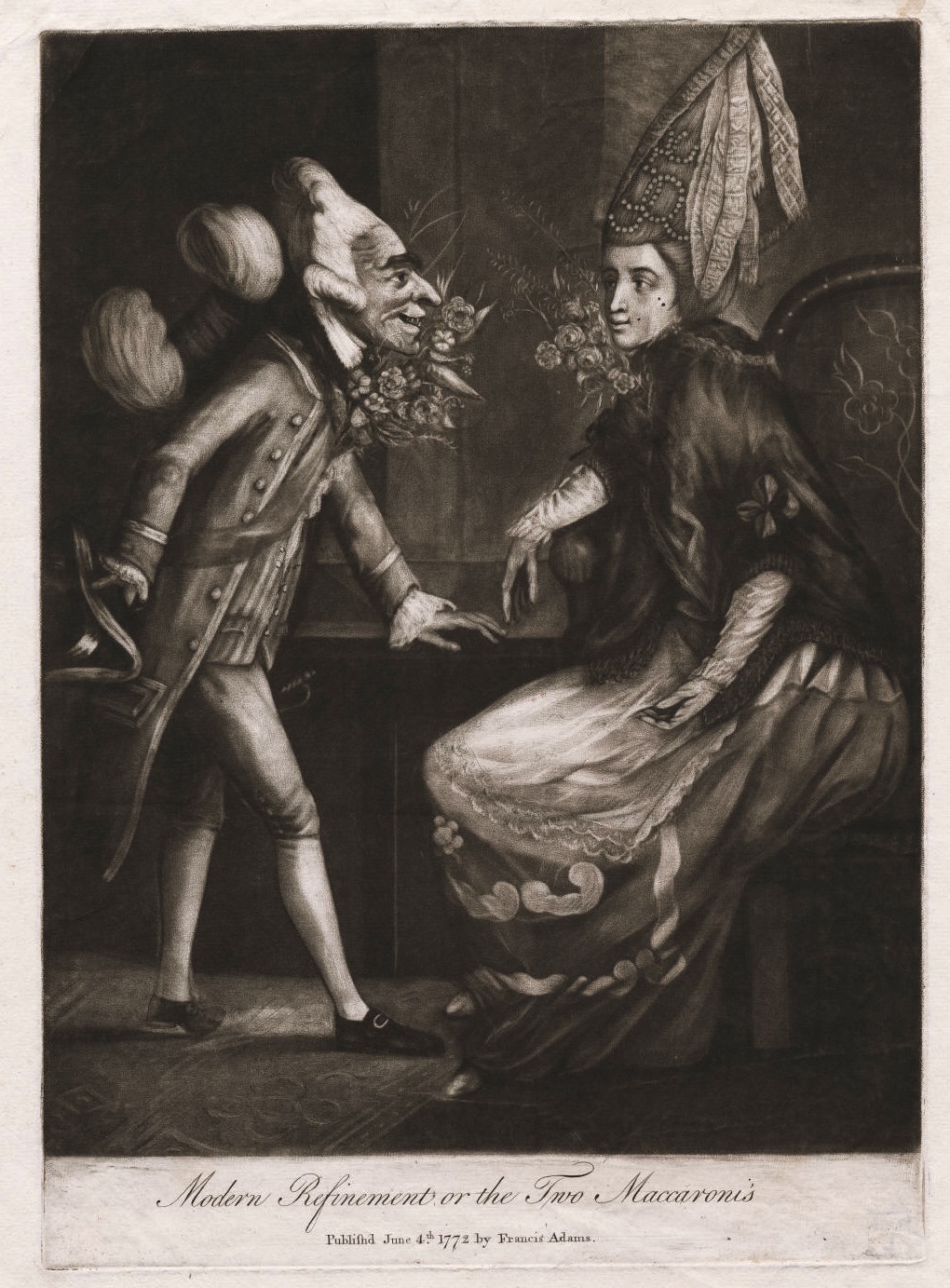
dandies), I was struck again by how the old church is a perfect testament to the talents, skills, and beliefs of the 18th c. colonists who built it in 1774-1775.
Roger Williams (c1603-1683) not only founded the church, but also what would become the state of Rhode Island. A Cambridge-educated theologian, Williams fled Stuart Britain in the 1630s to find freedom to practice his religious beliefs. Unfortunately, the Puritans of Massachusetts Bay proved no more tolerant of his tenets than England had been, and again he fled, this time to create a colony of his own, drawing his followers together into the first congregation of Baptists in the New World in 1636. (Read
here for an excellent brief history of Williams and the First Baptist Church.) Unlike other colonies with established, official churches, Williams wanted his colony to remain "a shelter for persons distressed of conscience" where all faiths were free to worship; in 1658, Rhode Island also became the home of the second-oldest Jewish congregation in America.
By the 1770s, the small Baptist congregation had grown dramatically, and required a new home. Despite the political unrest in the American colonies, the congregation looked back to the great churches of London for the inspiration for the new meeting house, churches designed by
Christopher Wren and
James Gibbs, like St Clement Danes in Westminster,
right. It didn't matter that these London churches were Anglican, the same Anglican Church that Roger Williams had rejected. It was the imposing dignity and solemnity of the churches that the Rhode Islanders wished to copy. They did, too, combining the best of Georgian church architecture combined with a traditional New England clapboard meeting house.
But there was more "borrowing" in the actual construction. The new meeting house was to be the largest building in New England at the time, 80 x 80 feet, and able to seat 1200 people - approximately one-third of Providence's population in 1770. Finding a sufficient number of skilled housewrights and other tradesmen for the job should have slowed the building. But the British had closed Boston's harbor as punishment for the 1773 Boston Tea Party, putting scores of shipbuilders and carpenters out of
work. Desperate for work, these men made their way to Providence, and with them, the new meeting house was able to be dedicated in 1775. The towering 185-foot steeple - the first on a Baptist meeting house - was erected in just three and a half days.
Their work has stood the test of time - and numerous hurricanes! - over the centuries, and the meeting house is as beautiful a building now, as a National Historic Landmark nestled into the side of College Hill, as it must have been in 1775. While it is still in use for worship, with the congregation celebrating its 375th anniversary this year, and for Brown University's commencement ceremony each spring, there are
guided tours open to the public.
So many historic sites commemorate wars and battles; it's good to see one that honors both freedom and tolerance as well as the phenomenal handwork of those long-forgotten craftsmen.
Above: First Baptist Meeting House, Providence, RI. Photo copyright Susan Holloway Scott.
Below: St. Clement Danes Church, Strand. Published by William Clark, print made by Thomas Hingham, Britain, 1817.




 One of us --