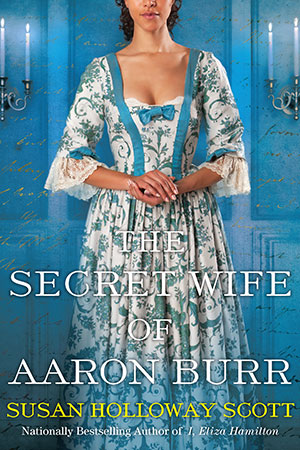
Thursday, August 23, 2018

Gone Fishin'

Thursday, August 23, 2018
Susan & Loretta report:

We were doing a lot of typing in June ... and July ... and August. But summer’s ending, and it’s time for a break. We’ll be back the second week in September.

Meanwhile, we hope you enjoy these last lazy, hazy, days of summer. For those of you who, like us, have sweltered in ghastly heat and humidity and drowning in local imitations of monsoon season, we wish a change in the weather for something much more agreeable.

See you in September!

Image: Enrique Estevan y Vicente, Zwei Anglerinnen mit Parasol am Bach (Two female anglers with parasol at the stream) 1880

Tuesday, August 21, 2018

Woman Reads, Wearing a Bonnet Indoors—Really?

Tuesday, August 21, 2018
Blacklock, A Quiet Read
Loretta reports:

A short time ago, this image appeared on social media, with a question about women wearing hats indoors while reading. This sort of thing leads to my putting on my deerstalker hat and sticking the pipe in my mouth—but not the needle in my arm—and sleuthing.

My collection of historical dress images includes a goodly number of early 19th century ones in which women are indoors, reading, wearing a headdress. They are usually in morning dress, and the headgear is a cap. Some caps are so elaborate, though, that at first glance they seem to be hats, like the English lace cap on the left in this image.

This fashion plate, of a promenade dress, definitely shows a hat (straw), and the woman is holding a book open. Since she’s wearing a rosary and cross,  she could be in church, and that could be a prayer book she’s holding. Or not. We often see Regency-era fashion plates of women wearing crosses with evening dress: It’s jewelry.

However, the painting in question is not from the Regency era. It comes from the late 19th/early 20th century, during a period of Regency nostalgia. In the early 1800s, Jane Austen was liked in some quarters, dismissed in others, but essentially no big deal. It wasn’t until the 1880s that she became a rock star. At this time editions of her books illustrated by the likes of Hugh Thomson and C.E. Brock begin to appear, and we start to see a Regency revival in painting. The image in question is from this Regency revival/nostalgia era, when artists like Edmund Blair Leighton, Frederick Morgan, Frédéric Soulacroix, Giovanni Boldinim and many others created their versions of the Regency (and Empire) eras.

Kennington, Lady Reading by a Window c 1900
Looking into this later time period offered a little more enlightenment. William Kay Blacklock’s painting is dated circa 1900. In the late 1800s/early 1900s, I did find a few images of women reading, indoors, wearing hats, like this one by Frederick Carl Frieseke, and this one by James Guthrie.

In conclusion, I can’t altogether explain it, but the image might be historically inaccurate only for the era it’s conveying. Or maybe not. Maybe the lady is sitting in the dentist’s office, waiting her turn. Or maybe she's waiting for her boyfriend to come and collect her for a drive in Hyde Park. Or maybe, as author Caroline Linden suggested, "She's getting ready to go out but just wants to finish one last chapter..." What do you think?


If you've seen other images with this reading-indoors-wearing-a-hat theme, please feel free to share.


My thanks to Lillian Marek for sending me on this very interesting and educational investigation!

Images: William Kay Blacklock, A Quiet Read, possibly circa 1900; Thomas Benjamin Kennington, Lady Reading by a Window; Gandalf’s Gallery via Wikipedia.

Clicking on the image will enlarge it.  Clicking on the caption will take you to the source, where you can learn more and enlarge images as needed.

Sunday, August 19, 2018

The Queen(s) with the Pearl Earrings

Sunday, August 19, 2018
Susan reports:

I've written an earlier blog post about the large pearl that King Charles I wore in one ear. It seems only fair to write about an equally famous pair of pearl earrings worn by his queen, and several others besides. Many legendary jewels of the past have disappeared through wars and revolution, or have been broken up, re-cut, and reset until they bear no resemblance to their original design. But these magnificent earrings, left, have miraculously survived with both pearls and diamonds intact, and with a tantalizing history to match.

The earrings first appear as part of the dower jewels of Marie de' Medici (1575-1642), an Italian princess who left her native Florence to wed the French king, Henry IV (1552-1610). The de' Medici family was old, powerful, and very wealthy, and the jewels that Marie brought with her astonished the French court. At this time, pearls were the most valuable of precious gems, rare accidents of nature. The two almost perfectly matched droplet pearls in the new queen's favorite pair of pendant earrings were of a quality not been seen before in Paris. Other women at the court wore pearl drops (many ladies in 17th c. portraits are shown with them) but most of these pearls were coated glass. Marie's were real, and fit for a queen. She was painted wearing the earrings, right, in 1616 by Peter Paul Rubens.

When Marie's youngest daughter, the princess Henriette Marie (1609-1699), married the English King Charles I (1600-1649) in 1625, Marie gave the pearl earrings to her as a wedding gift. Henriette, too, was painted many times wearing the earrings, including this portrait of her as a young wife in 1632 by Sir Anthony van Dyck. Her marriage was a happy one, and blessed with many children. But the earrings brought Henriette no luck as the English queen. Her husband's unpopular politics eventually led to a disastrous civil war that cost him his life. Henriette was forced to flee the country in 1644 soon after giving birth to their last daughter, and leaving the baby behind. In exile in France with her sons, she was forced to gradually sell all her jewels first to help support her husband's army, and then, as a widow, to keep herself from poverty. Mementos of happier times, the pearl earrings were among the last jewels to go, finally being purchased by her nephew, the French King Louis XIV (1638-1714) in 1657.

The nineteen-year-old Louis had fallen desperately in love with eighteen-year-old Marie Mancini (1639-1715), the Italian niece of Cardinal Jules Mazarin, the king's primary minister. At first the match was approved both by the cardinal and Louis's widowed mother, and Louis presented the pearl earrings to Marie as his future queen. Marie's portrait, left, shows her wearing the pearls along with flowers in her hair. But politics intruded and the match was broken off, with Louis instead marrying the Spanish Infanta Maria Theresa, and Marie wed to the Roman Prince Lorenzo Onofrio Colonna. But Marie kept the king's pearls, and the earrings were by now so associated with her that they became known by her name, the Mancini Pearls.

No one is certain whether she left the earrings to one of her children, or sold them herself during her long and tumultuous life. In fact, there is no record of the pearls at all for nearly 250 years, until they appeared at Christie's auction house in New York in October, 1979. There they were sold to a private collector for $253,000, a price that almost seems reasonable considering all the history attached to them. They remain among the most famous jewels ever sold by Christie's.

Now I know that pearls, however beautiful, are inanimate objects, the work of an irritated oyster. But don't you wish these earrings could tell their story, and repeat even a few of the confidences and endearments, promises and secrets once whispered into the ears that wore them?

Saturday, August 18, 2018

Breakfast Links: Week of August 13, 2018

Saturday, August 18, 2018
Breakfast Links are served! Our weekly round-up of favorite links to other web sites, articles, blogs, and images via Twitter.
Dr. David Hosack, revolutionary nerd - and physician to both Alexander Hamilton and Aaron Burr.
• The skeleton suit: sounds scary, but not to the little boys who wore them in the early 19thc.
• "A Gentleman having married a wife made this request to her that she would not ride upon a great dog in the house": gossip from 17thc vicar John Ward.
• Eighteenth century business women and their trade cards.
Mrs. Bridget "Biddy" Mason was brought to Los Angeles as a slave in 1851; she died free, and one of the city's wealthiest women.
Image: The Marquis de Lafayette used pre-printed invitations for Monday night suppers; guests included Americans like Adams, Jay, and Jefferson visiting Paris.
• "Anyone can develop a good telephone personality": How to Make Friends By Telephonea 1950 guide.
• In July, an 18thc white oak from Washington's era fell at Mount Vernon, but most of the stories surrounding the tree were from the Civil War.
Image: John Adams drew this map of his local taverns in Braintree and Weymouth, MA, in 1760.
• The drowned, submerged prehistoric forests of Lincolnshire.
• Aunt Fanny's school bell, c1920.
Old Bet, the first elephant brought to America, arrived in Newburyport, MA in 1797.
• Influenced by the Poor Law Amendment Act of 1834, workhouses built in 19thc England were designed to split up families by putting them in different laboring groups.
• The deadly 1911 heatwave that drove people insane.
Image: Mona Friedlander and Joan Hughes, the first women to fly military planes in Britain, 1940.
Julia Child's recipe for a thoroughly modern marriage.
• Benjamin Franklin discovers tofu for America.
• Six historic sites in Britain that survive from the Age of Steam.
Image: Cat paw-prints preserved in medieval tiles.
Hungry for more? Follow us on Twitter @2nerdyhistgirls for fresh updates daily.
Above: At Breakfast by Laurits Andersen Ring. Private collection.

Friday, August 17, 2018

Friday Video: Beautiful Music from an 18thc Harp

Friday, August 17, 2018

Susan reporting,

Here's a wonderfully peaceful way to ease into the weekend: harpist Nancy Hurrell plays a short selection on an 18thc French pedal harp in the collection of Museum of Fine Arts, Boston. Made in Paris around 1785 by master luthier and harp-maker Godefroi Holtzman, the harp, right, is an exquisitely beautiful instrument, a work of art even if it didn't make such lovely music. For more information about the harp, please see the museum's page here.

Romance from Sonata in B-flat major (op.13, no. 1), 1775-90, by Jean-Baptiste Krumpholtz, performed by Nancy Hurrell.

If  you received this post via email, you may be seeing an empty space or black box where the video should be. Click here to view the video.
 
Two Nerdy History Girls. Design by Pocket